Decorating · 6 min read · July 31, 2026
Why a Dresser Belongs in Your Entryway
The most underused piece of furniture in a coastal house isn't a console — it's a dresser. Seven drawers of hidden storage, a full surface for a lamp and hydrangeas, and an entry that finally stays tidy.
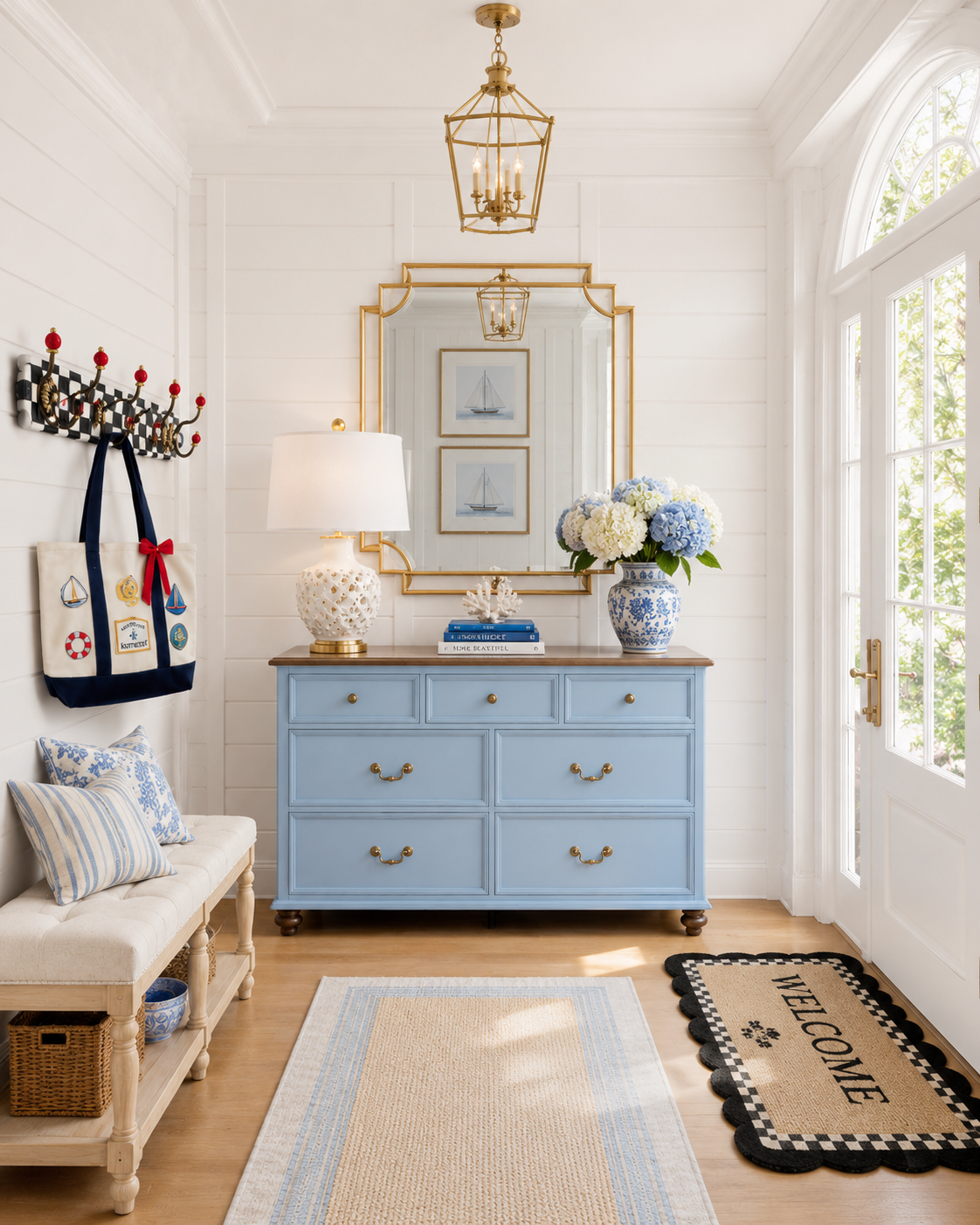
Most entryways are furnished with a narrow console table — pretty, useless, and covered in mail by Tuesday. A dresser does everything the console does and then hides the rest of your life in seven drawers. In our hydrangea-blue entry, the chest under the gold mirror holds dog leashes, sunscreen, beach towels, gloves, keys, and the extra roll of wrapping paper that has nowhere else to live. From the doorway you'd never know. That's the whole argument: a dresser gives you the storage of a mudroom in the footprint of a hallway, and it still looks like a piece of furniture rather than a system.
Start With the Right Chest — Depth, Height, and Color
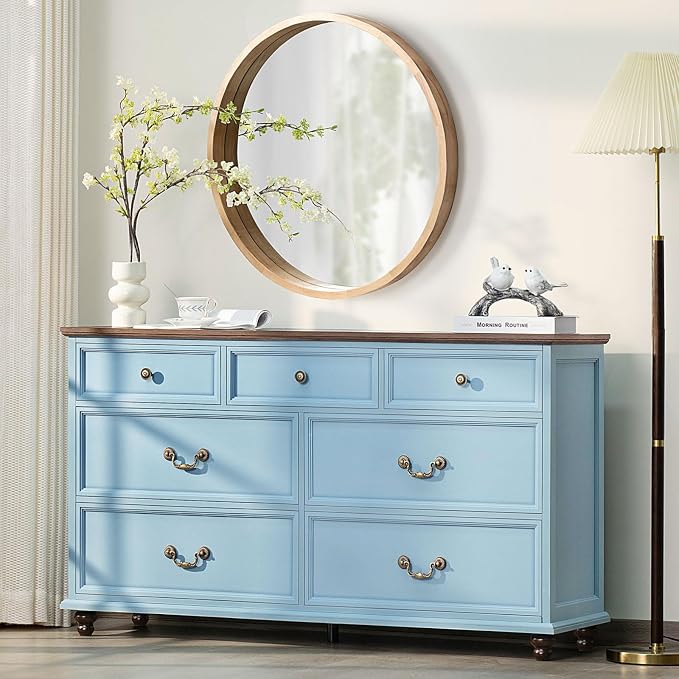
Look for something roughly 30 to 34 inches high so the top lands at hip level and works as a landing surface, and no more than 18 inches deep so a hallway still reads open. Seven drawers beat three: small top drawers are where keys, sunglasses, and the dog's things belong, while the deep bottom pair swallow beach towels and winter hats. Color is what keeps it from feeling like bedroom furniture in the wrong room — a soft hydrangea blue with a warm wood top and antique brass bail pulls reads as an entry piece the moment you see it against white shiplap.
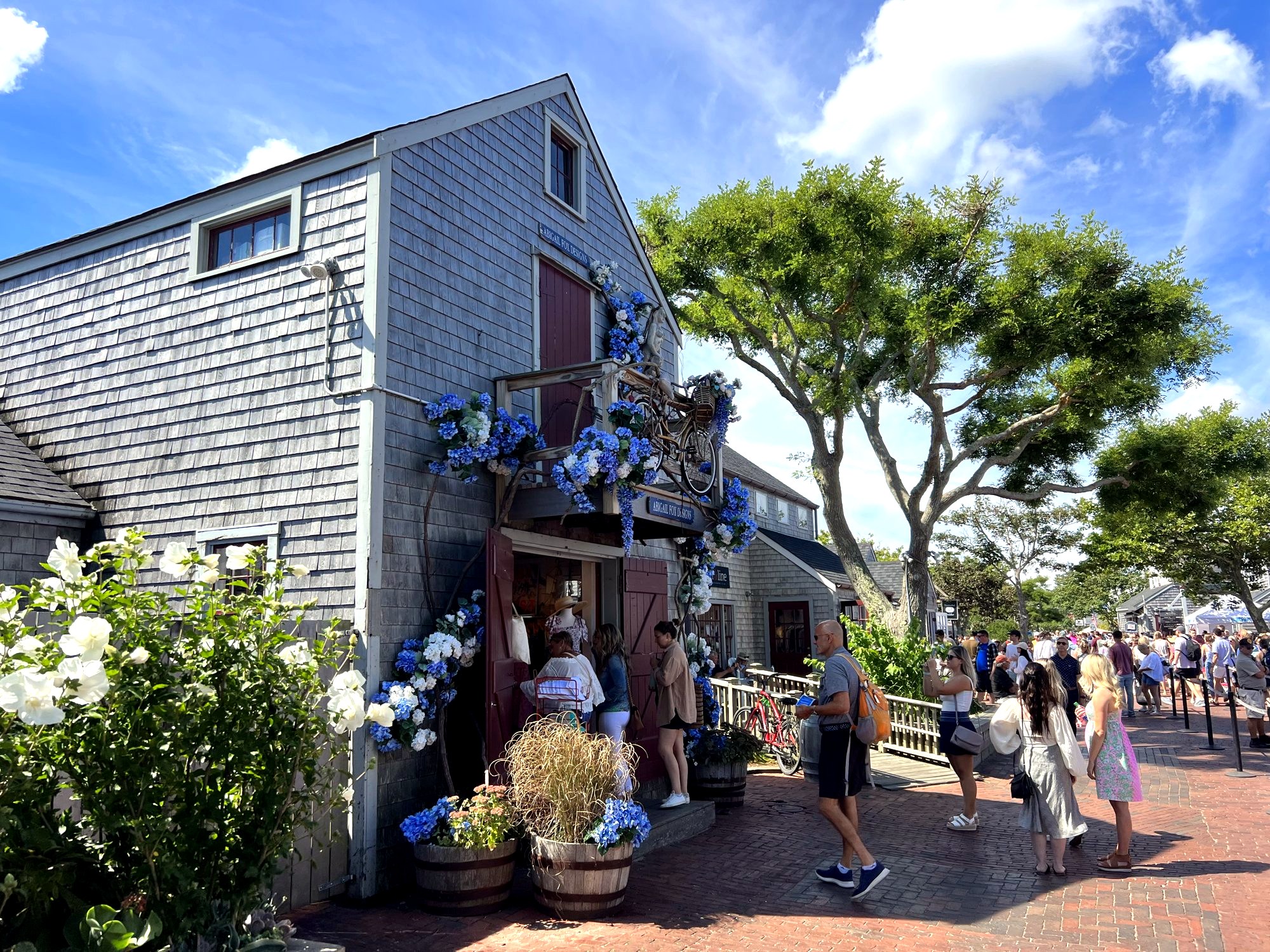
Give Every Drawer a Job
The reason entry storage fails is that nobody decides what goes where. Assign the drawers before you fill them. Top left: keys, sunglasses, lip balm, the little dish of loose change. Top right: dog leashes, poop bags, tennis balls, the brush. Middle: sunscreen, bug spray, hats, a folded canvas tote or two for the market. Bottom: beach towels in summer, wool scarves and gloves in winter — swap the two twice a year and the whole house feels seasonal. Line each drawer with a cut-to-fit grasscloth or a pretty paper and add a small linen bin for the loose things that refuse to stack.
Style the Top Like a Vignette, Not a Dumping Ground
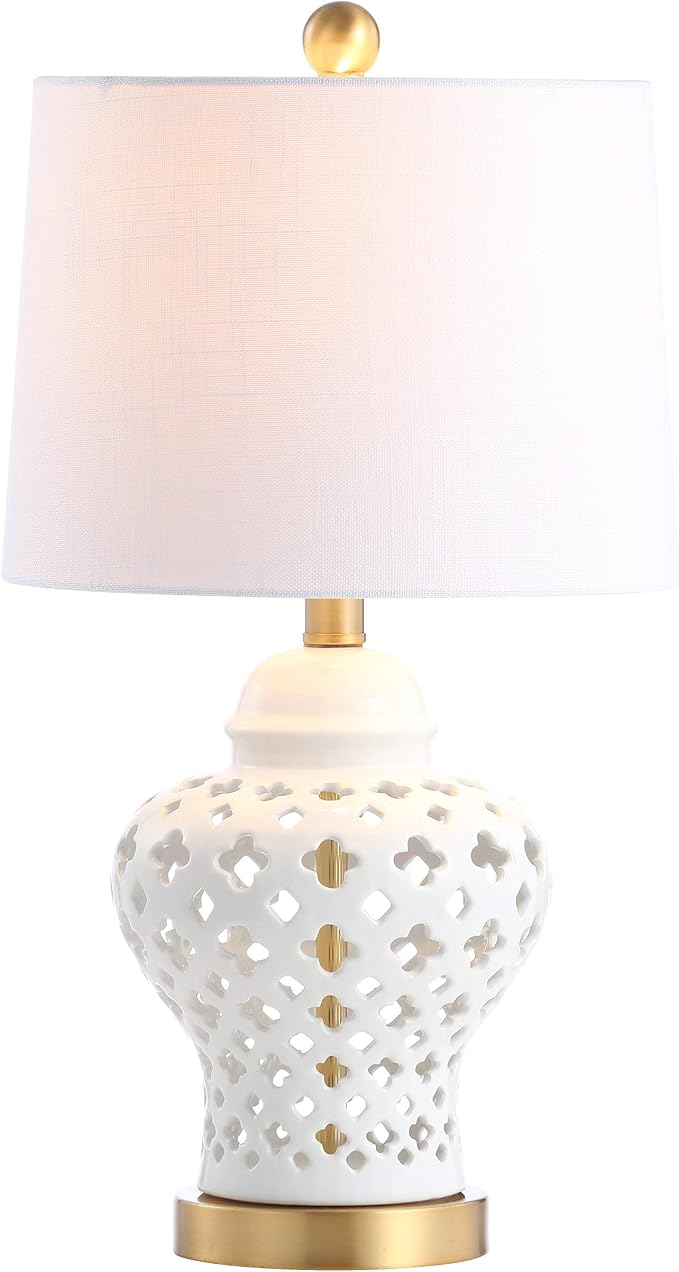
A dresser top only stays clear if you fill it deliberately. The formula that works every time: one lamp for height and evening light, one tall arrangement of hydrangeas, one stack of two coastal books with a shell or a small brass object on top, and one shallow catch-all tray. The tray is the trick — it gives mail, keys, and receipts a legitimate home so they never spread across the surface. A pierced-lattice ginger jar lamp on a brushed-gold base is the piece I'd choose here: it's tall enough to balance a big mirror and quiet enough to sit under it.
Hang the Mirror First, Then the Art
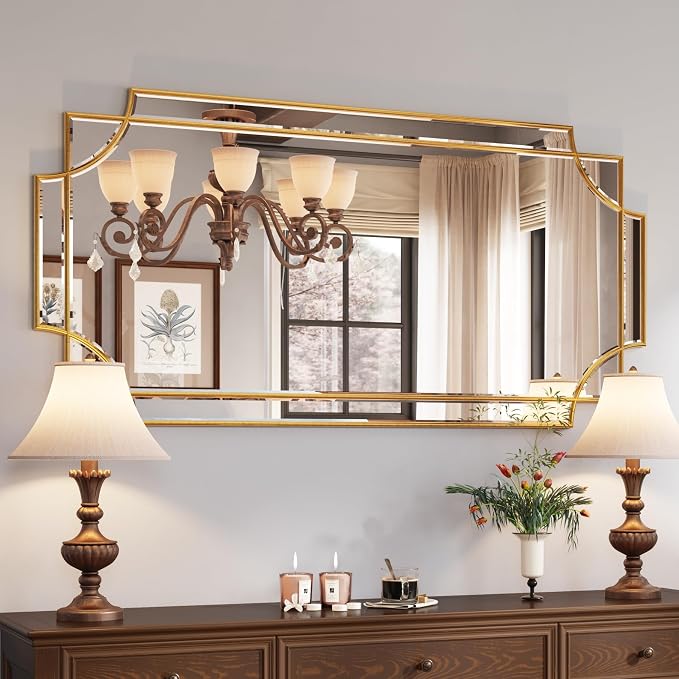
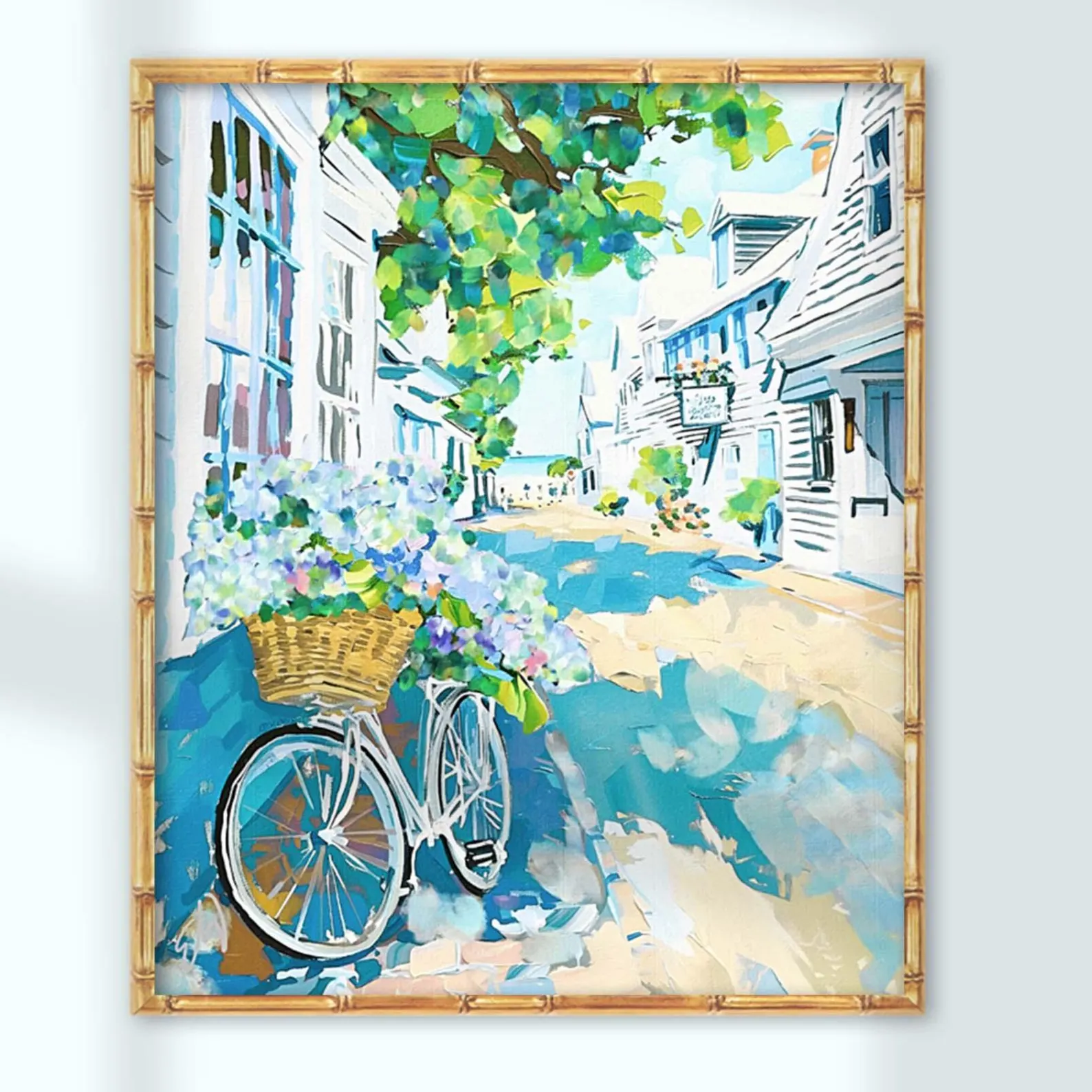
An oversized mirror above the chest does two things at once — it bounces daylight from the front door down the hall, and it's the last thing you check before you leave. Hang it so there's six to eight inches of breathing room between the dresser top and the bottom of the frame. Then flank it, or continue past it, with a small pair of coastal prints in slim frames; a white bicycle with a basket of hydrangeas on a cobblestone lane is exactly the note that says island without saying nautical.
Add a Bench, a Runner, and a Mat — the Working Layer
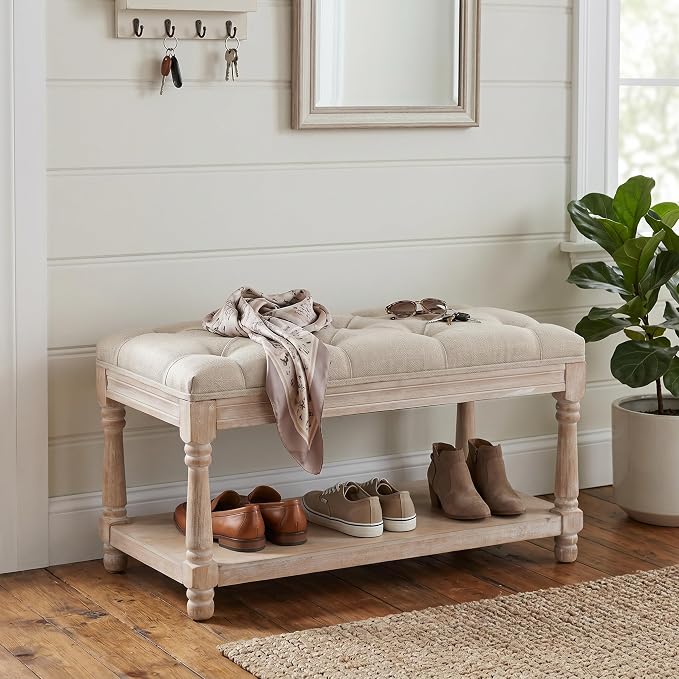
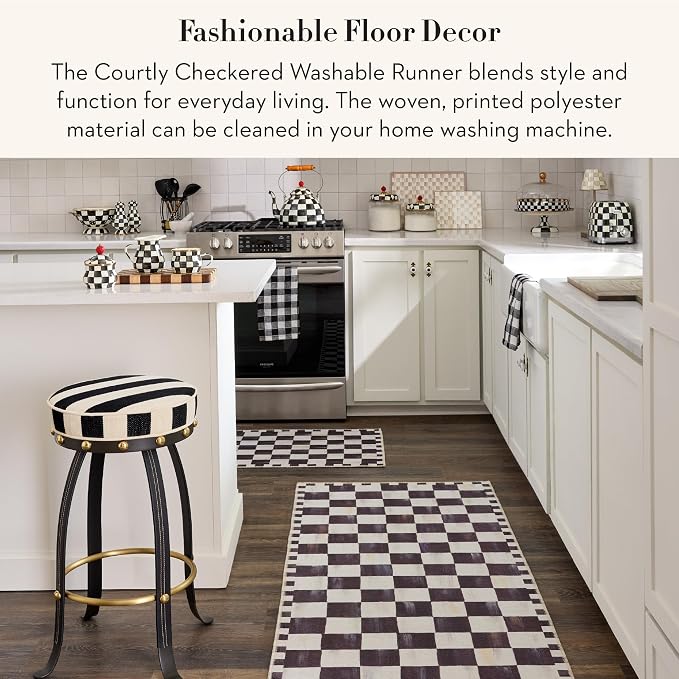
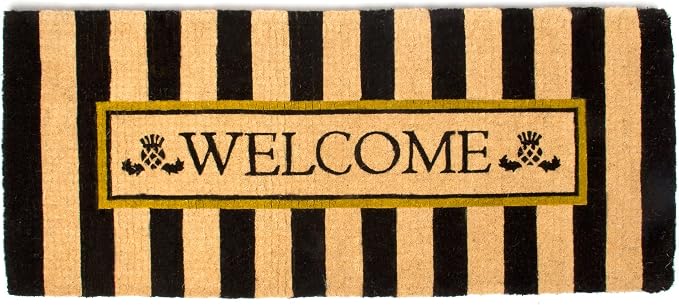
The dresser handles what you want hidden; the floor handles what's wet and dirty. A tufted linen bench with an open bottom shelf gives you a place to sit and pull off boots and a row of baskets underneath for shoes. A washable checkered runner down the hall takes the daily traffic — sand, paws, rain — and goes in the machine when it's had enough. And a long coir mat at the door stops most of it before it ever gets inside. Together they're the difference between an entry that photographs well and one that actually works in August.

Small Entry? The Rules Still Hold
In a narrow hallway, choose a three-drawer chest around 36 inches wide instead of a 54-inch piece, skip the bench, and hang hooks on the opposite wall for bags and hats. In a house with no true foyer, a dresser works just as well on the wall you pass on the way in from the garage or the back porch — that's where the sandy towels and the market totes actually enter anyway. And if you already own a dresser you've stopped loving in a bedroom, paint it a soft blue, swap the hardware for antique brass, and move it to the front door. It's the cheapest storage upgrade in the house.
See the whole entry put together — the blue chest, the gold mirror, the lattice lamp, the bench, and the Courtly Check runner — in our Room Inspiration feature, where every piece is shoppable.
Nantucket Charm is a participant in the Amazon Associates program. We may earn a small commission on purchases made through links in this story, at no extra cost to you.