Travel · 9 min read · July 15, 2026
A Day at the MacKenzie-Childs Farmhouse in Aurora, New York
A pilgrimage to the black-and-white-checked farmhouse on Cayuga Lake — the story of Victoria MacKenzie-Childs, the park-like grounds, and the tiny Finger Lakes village that inspired one of America's most beloved home brands.
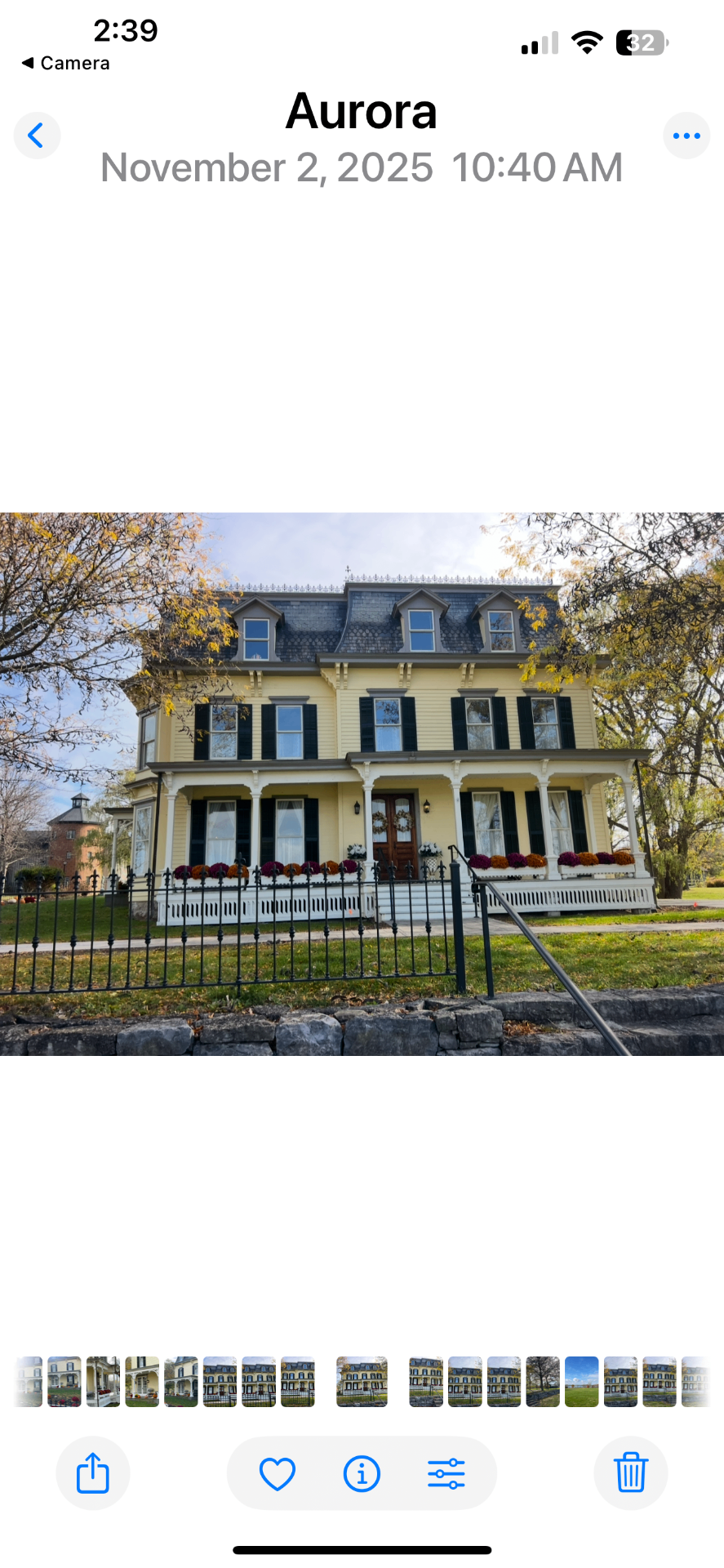
Some places feel like they were painted rather than built. The MacKenzie-Childs Farmhouse in Aurora, New York is one of them. Perched high above the sapphire-blue waters of Cayuga Lake, on sixty-five acres of park-like grounds, the buttercup-yellow Victorian at 3260 State Route 90 is the birthplace of every hand-painted teapot, courtly-check pitcher, and glossy black-and-white ceramic urn that has ever made its way onto a Nantucket porch. I drove up through the rolling farmland of the Finger Lakes on a bright autumn morning — cornfields turning gold, the sky an impossible blue — and by the time I turned into the long lane past the ornamental iron fence, I understood why so many people plan their entire fall around a visit here. This is not a store. It is a garden, a farmhouse, a private studio, and a slow, delicious afternoon rolled into one.
The Drive Into Aurora — America's Most Beautiful Small Town
Aurora, New York sits on the eastern shore of Cayuga Lake, the longest of the Finger Lakes and the color of a Mediterranean postcard. The village is barely half a mile long — a single stretch of Route 90 lined with Greek Revival inns, a nineteenth-century college campus, a lakefront green, and clapboard houses in soft cream and buttercup and pale grey. National Geographic Traveler once called it one of the prettiest small towns in America, and driving in feels like stepping into a Wyeth painting. The lake is the star. The water is a clear turquoise-blue that seems more Caribbean than Central New York, and on a still morning the far shore looks close enough to reach across.

The Story of Victoria and Richard MacKenzie-Childs
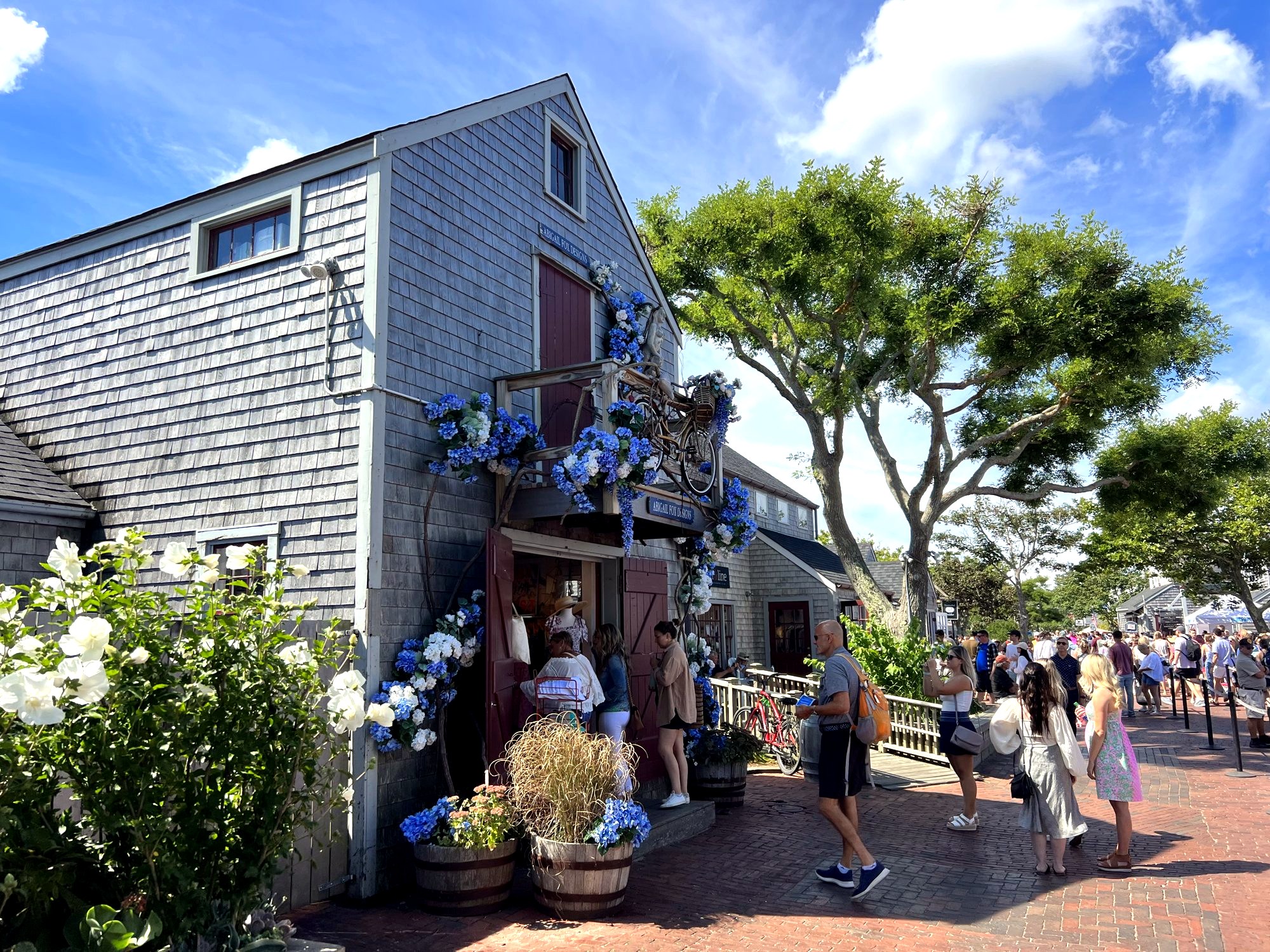
In 1983, Victoria and Richard MacKenzie-Childs — a young ceramicist couple with two small children — bought a rambling old dairy farm on a hill overlooking Cayuga Lake. Victoria had grown up in the Finger Lakes; Richard was a Californian potter she had met at the New York State College of Ceramics at Alfred University. They moved into the sagging Victorian farmhouse, threw up canvas tents in the fields for kilns and studios, and began hand-painting the whimsical checked pottery that would eventually turn into an international brand. Victoria was the visionary — every teapot, urn, and enamel piece begins with her sketches — and the aesthetic she invented is unmistakable: black-and-white Courtly Check, majolica glazes, sculptural bows, rosy florals, and a belief that beauty and joy belong on every ordinary object in a home. The company grew, was sold, went through bankruptcy in 2001, and today operates under new ownership — but the Farmhouse and its grounds are still the beating heart of the brand, and Victoria's original hand is visible in every corner.
The Farmhouse — A Living Piece of Art
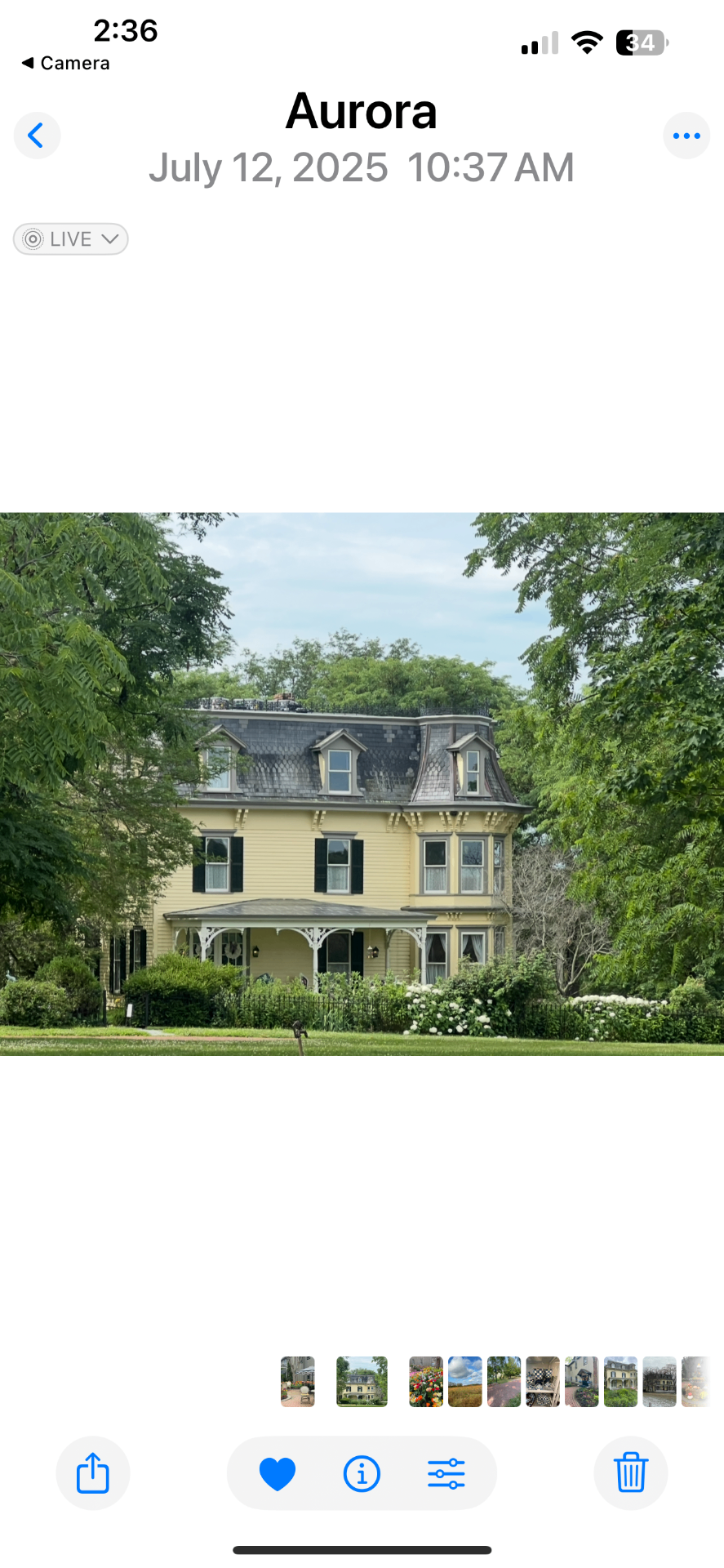
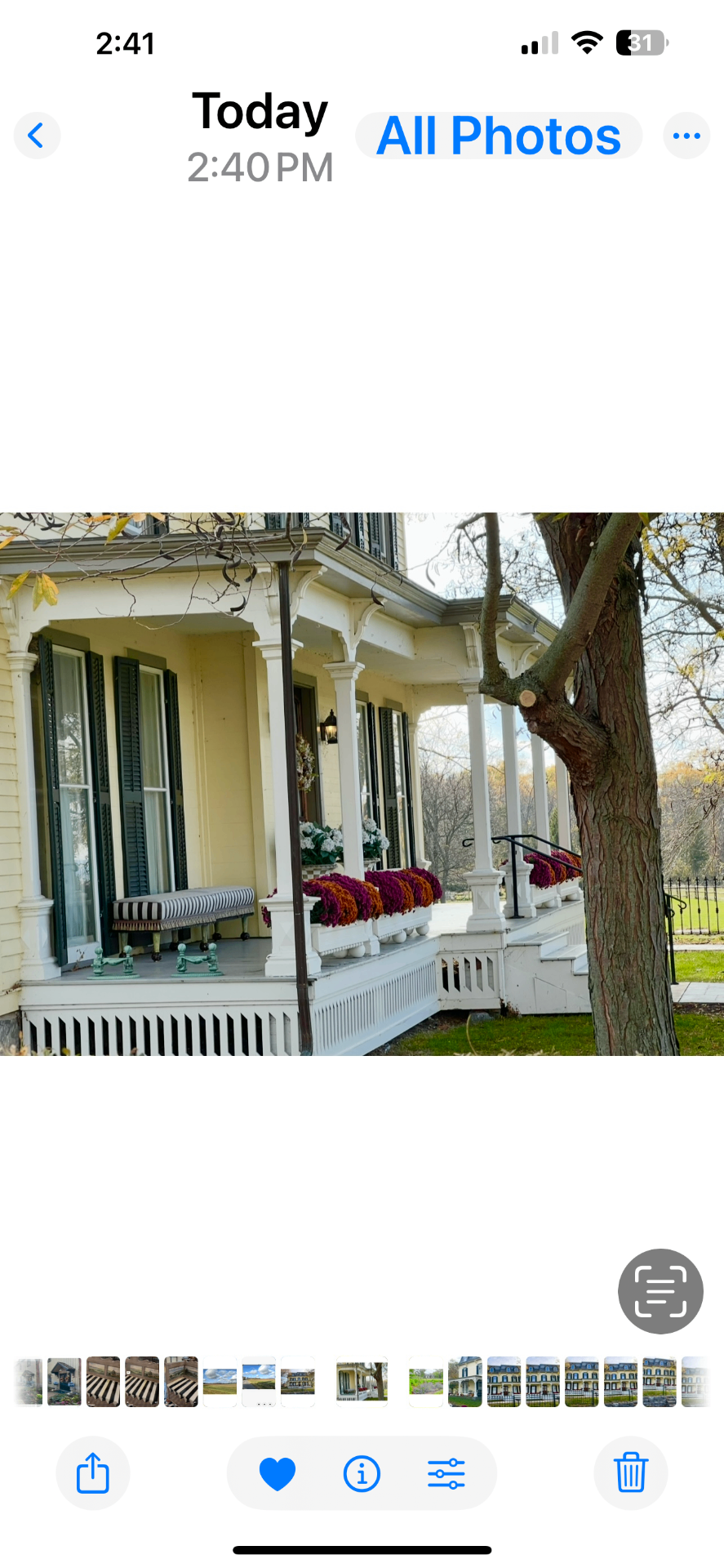
The 1830s Victorian at the top of the hill is not a museum behind velvet ropes. Every Wednesday through Sunday in season, small guided tours lead you through room after room where every inch — the walls, the floors, the ceilings, the stair risers, the doorknobs — has been hand-painted, decoupaged, or embroidered by Victoria herself. Cabbage-rose wallpaper meets checkerboard floors meets a table set for twelve with mismatched majolica. It is maximalism at its most joyful, and it is impossible to walk through without smiling. Even the front porch tells the story: black shutters, gingerbread trim, and enormous urns of blue hydrangeas flanking the double doors, with a black-and-white striped bench where you can sit and look out over the lake.
The Grounds — Sixty-Five Acres of Garden
This is what nobody tells you before you visit: the grounds are as beautiful as the store. Sixty-five acres roll down the hill from the Farmhouse toward the lake — perennial beds full of catmint and iris and phlox, a small farm with heritage sheep and long-lashed goats, brick paths through tulip beds in May, and an ornamental garden folly that looks like it belongs at a French country estate. Bring a coffee and a book and you could easily spend three hours just wandering. In the spring, tulips explode in every color at the entrance to The Store; by June, catmint takes over the lower gardens with a haze of purple; by fall, the maples along the drive turn the whole property gold.
The Potting Shed — A Storybook in Miniature
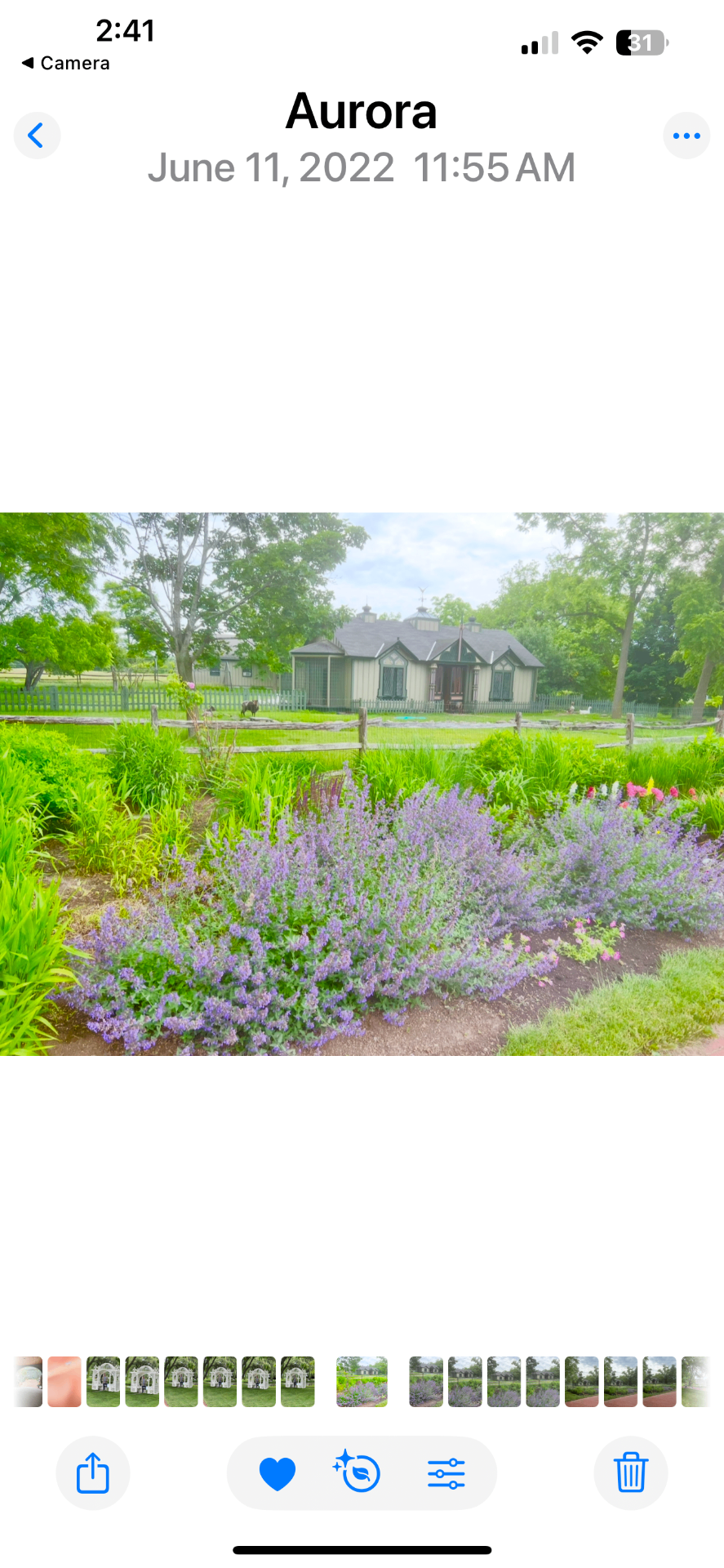
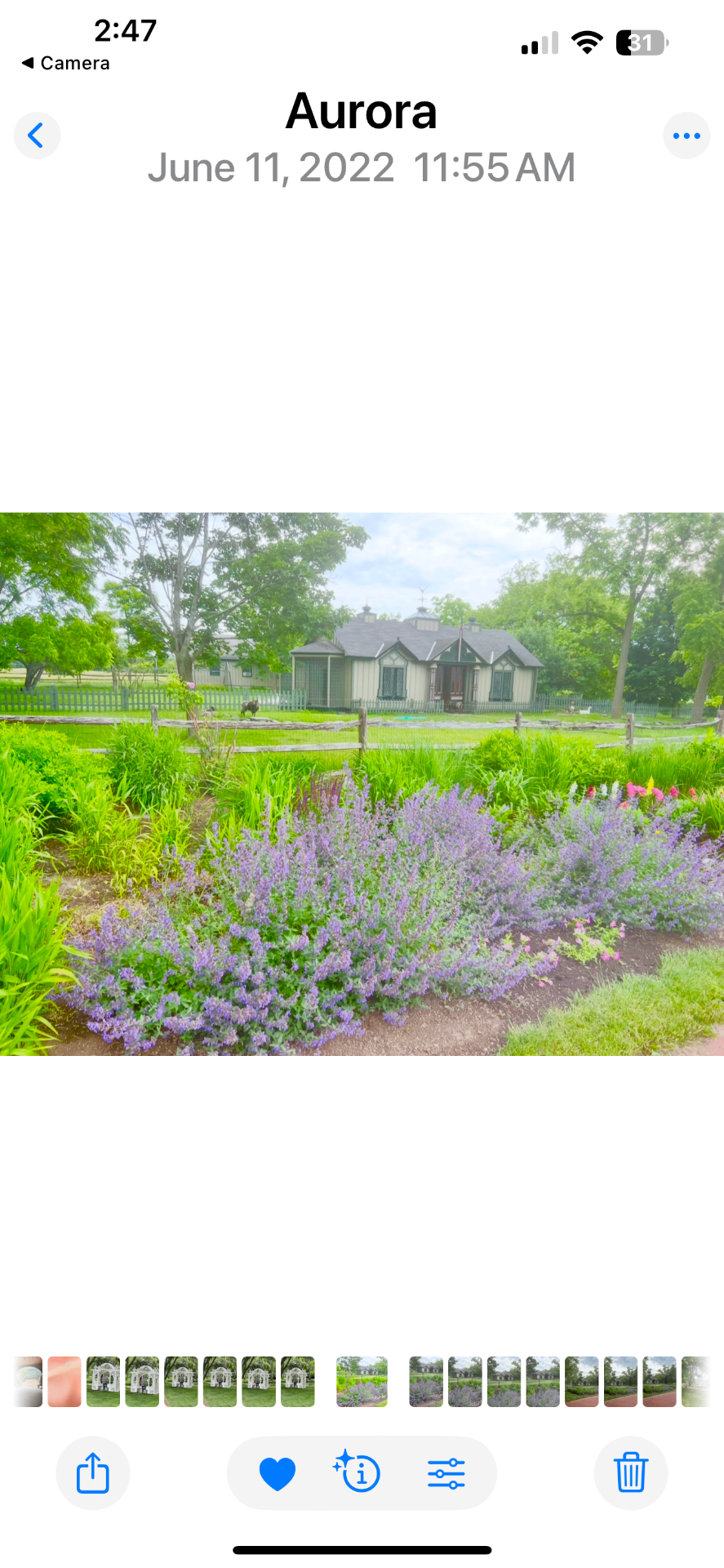
Halfway across the lower lawn, behind a split-rail fence and a wide bed of purple catmint, sits the sweetest little building on the entire property — the potting shed. It is a proper Victorian cottage in miniature, with a steep slate roof, two tiny cupolas, pale sage-and-cream clapboard, and green shutters flanking the doors. In front, an English-style perennial border spills over onto the path: catmint, iris, snapdragons, salvia, all of it clearly tended by someone who knows what they are doing. This is where the gardeners keep their tools and start seedlings for the property, but from a distance it looks like something out of a Beatrix Potter book. Stand at the fence, take the photograph, and try to memorize the plant combination — this bed alone is worth the drive.
The Store — Behind the Checkerboard Sign
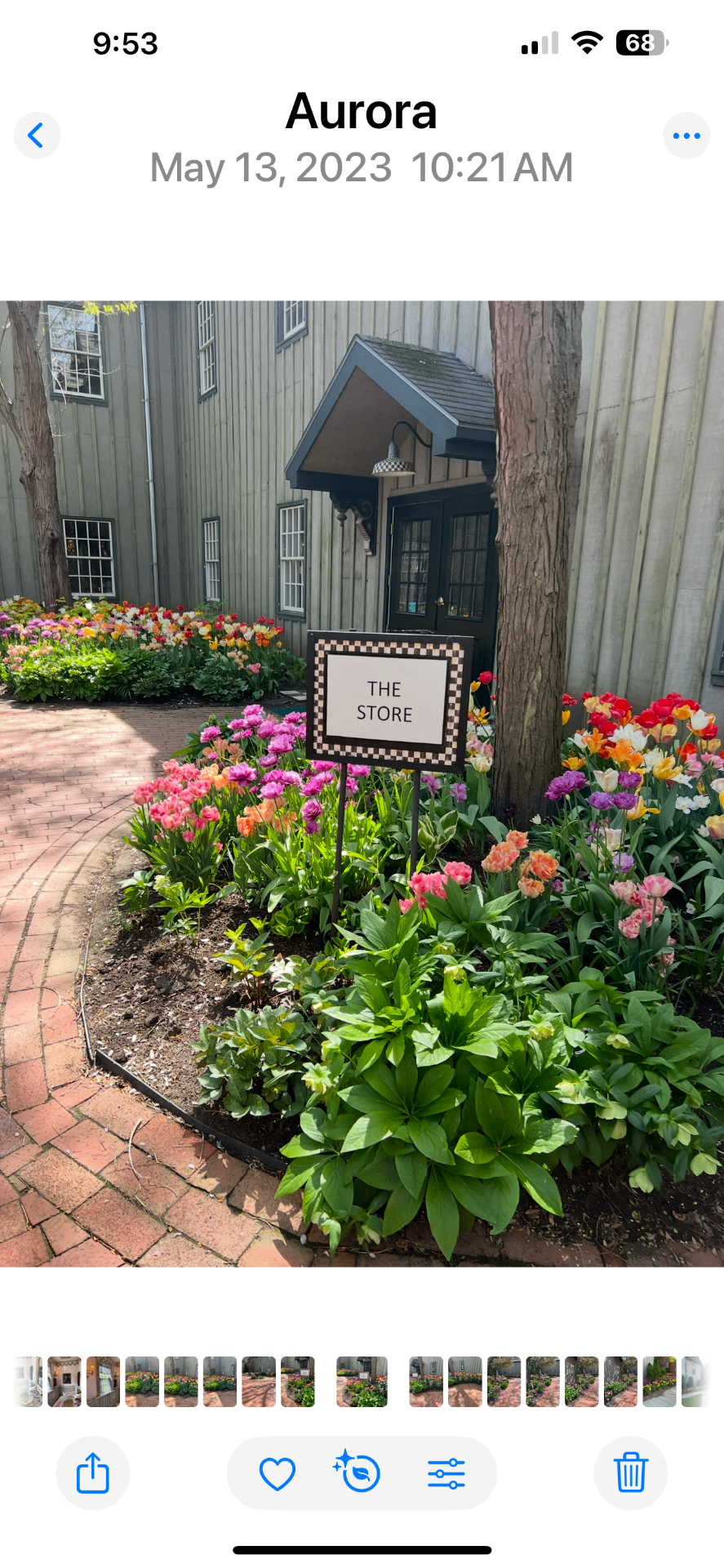
The retail store lives inside the historic black barn a short walk down from the Farmhouse. You know you have arrived when you see the small black-and-white checkerboard sign standing among the tulip beds — hand-painted, of course. Inside the barn, the ceilings soar, black wrought-iron chandeliers hang overhead, and every wall is stacked floor-to-ceiling with Courtly Check pitchers, Sky-and-Rosy Check dinnerware, enamel canisters, sculptural urns, and the enormous chess-piece finials that Nantucket porches have been stealing for a decade. There is a bakery counter, a garden shop, and a whole room devoted to the seasonal collection. Even if you buy nothing, walking through it feels like walking through a working studio — because that is exactly what it still is.
The Studio Shop — Where the Painting Still Happens
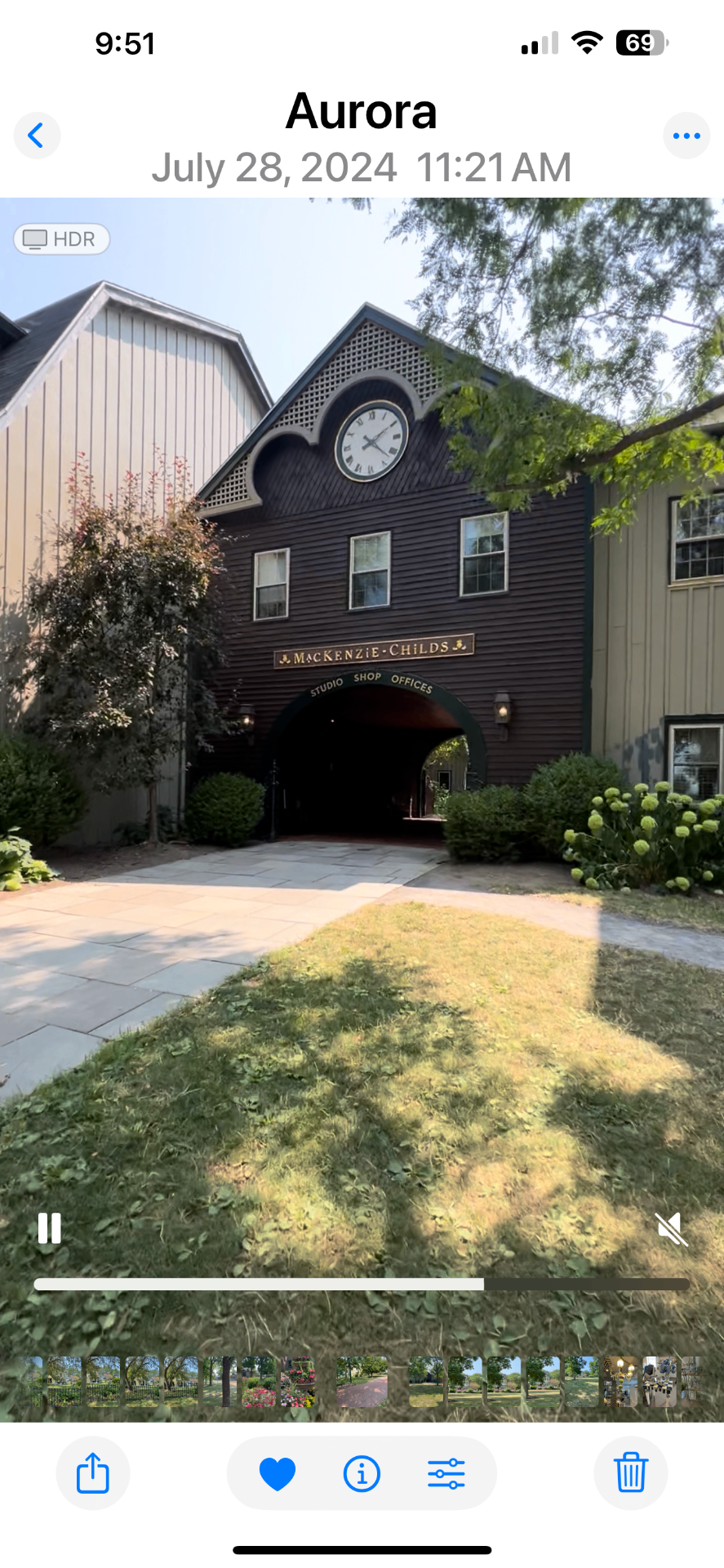
Behind the main store, tucked under a tall gabled archway, sits the Studio Shop — a working atelier where you can watch artisans hand-paint checks, brush glaze onto enamelware, and finish pieces to order. This is my favorite part of the whole property. There is something quietly moving about seeing a young painter with a fine brush freehanding a Courtly Check onto a lampshade, exactly the way Victoria did in a tent in 1983. Every piece that leaves this building has a human hand on it. That is why a MacKenzie-Childs teapot feels different from anything else on the shelf.
Courtly Check, Royal Check, and the Cabinet You Won't Forget
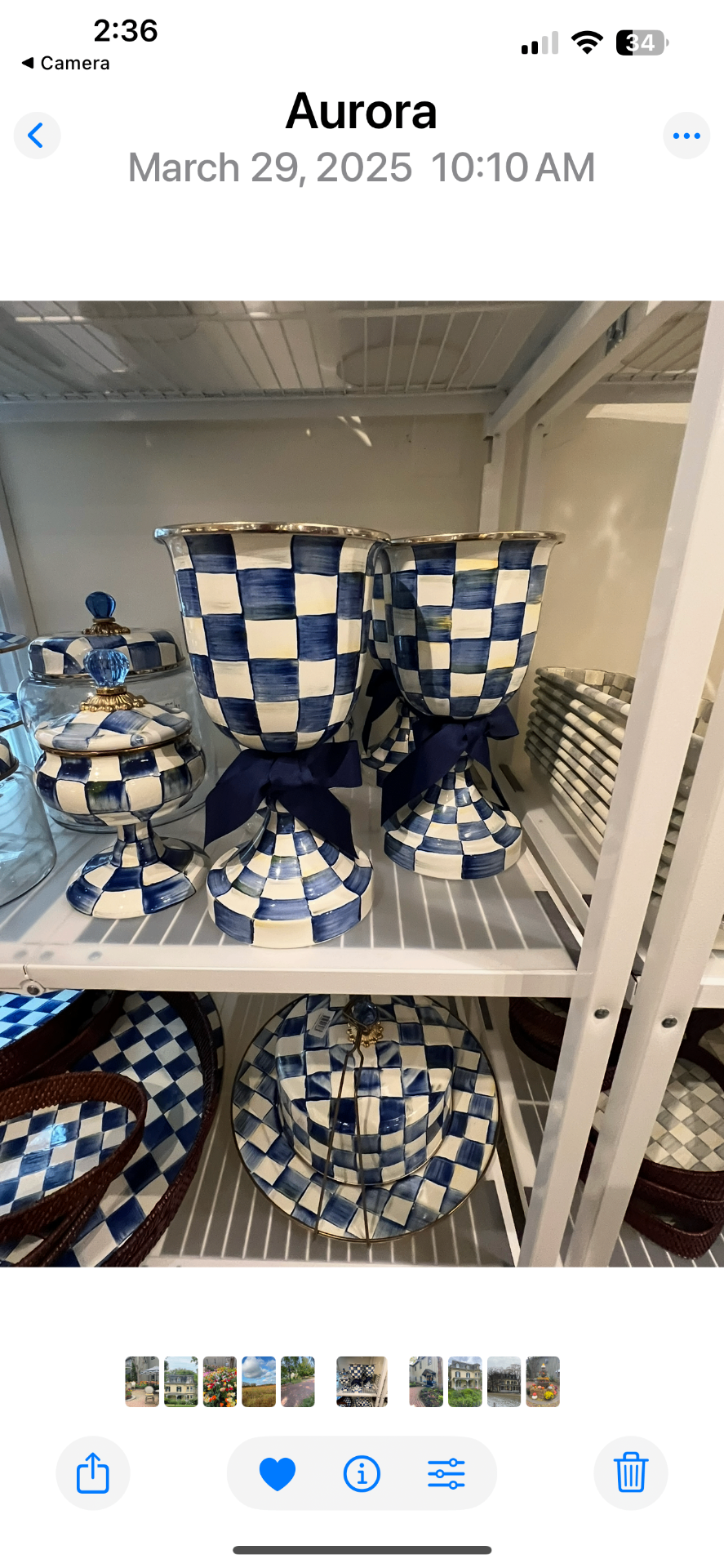
You will lose an hour in the room where the ceramics are displayed. The Royal Check urns — deep navy and cream, tied with hand-stitched grosgrain bows — are worth the drive on their own. There are cake pedestals under glass domes, footed cachepots that will hold a dozen hydrangeas, small covered jars for cotton balls on a guest-bath counter. The signature Courtly Check is black-and-white; Royal Check is navy-and-cream and feels a little more coastal, a little more Nantucket. Both patterns have been imitated for forty years and nobody has ever gotten them quite right.
A Doorway You'll Want to Copy
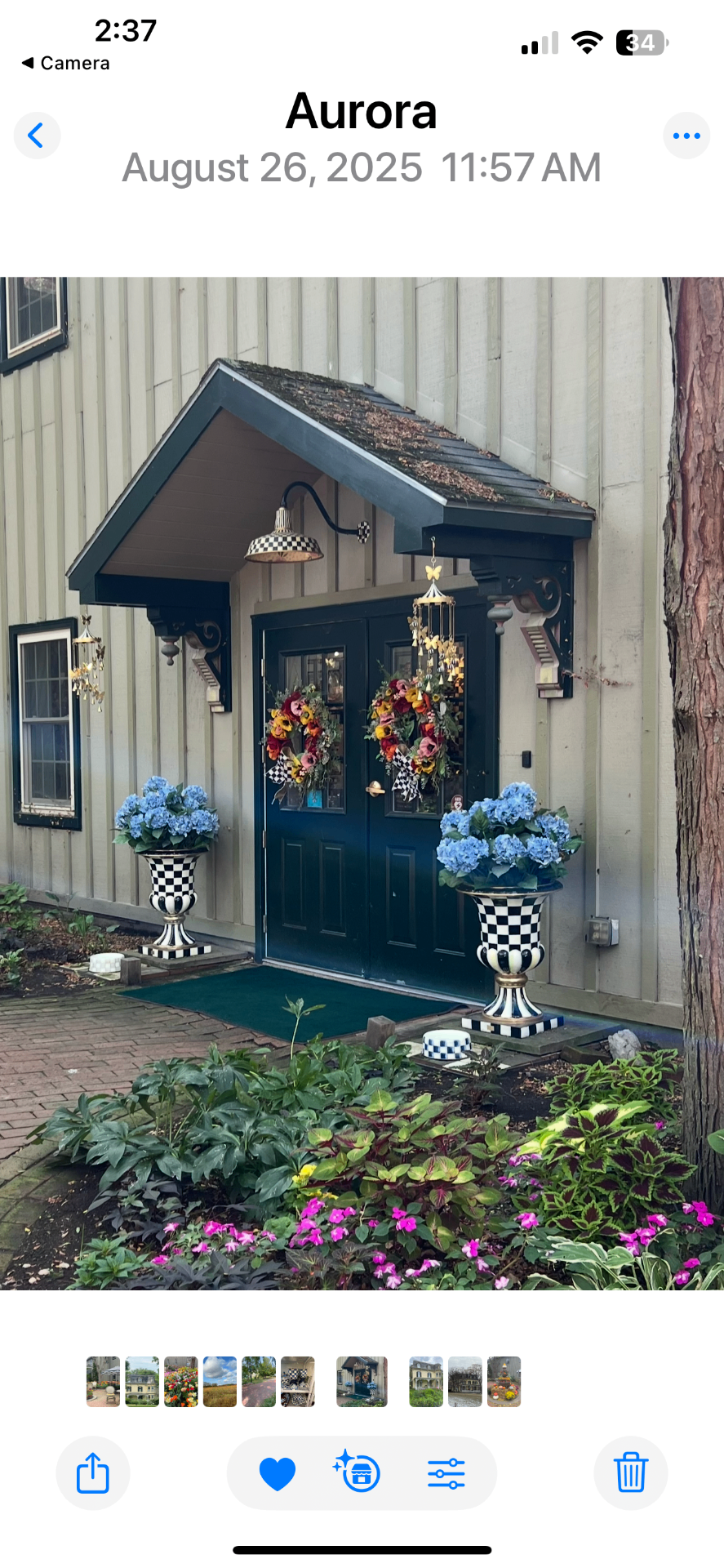
Somewhere between the barn and the gardens, tucked behind the Store, is the loveliest small entrance I have ever photographed. A little gabled porch with a checkerboard-painted gooseneck barn lamp, a copper wind chime, and a pair of enormous black-and-white checked urns overflowing with blue hydrangeas flanking a double navy door hung with autumn wreaths. This is the doorway that every coastal front porch on Nantucket has been quietly copying for years. If you take one souvenir home from Aurora, let it be this idea: an oversized checked urn, a mass of blue hydrangeas, and a black-and-white barn light overhead.
The Fields on the Way Home
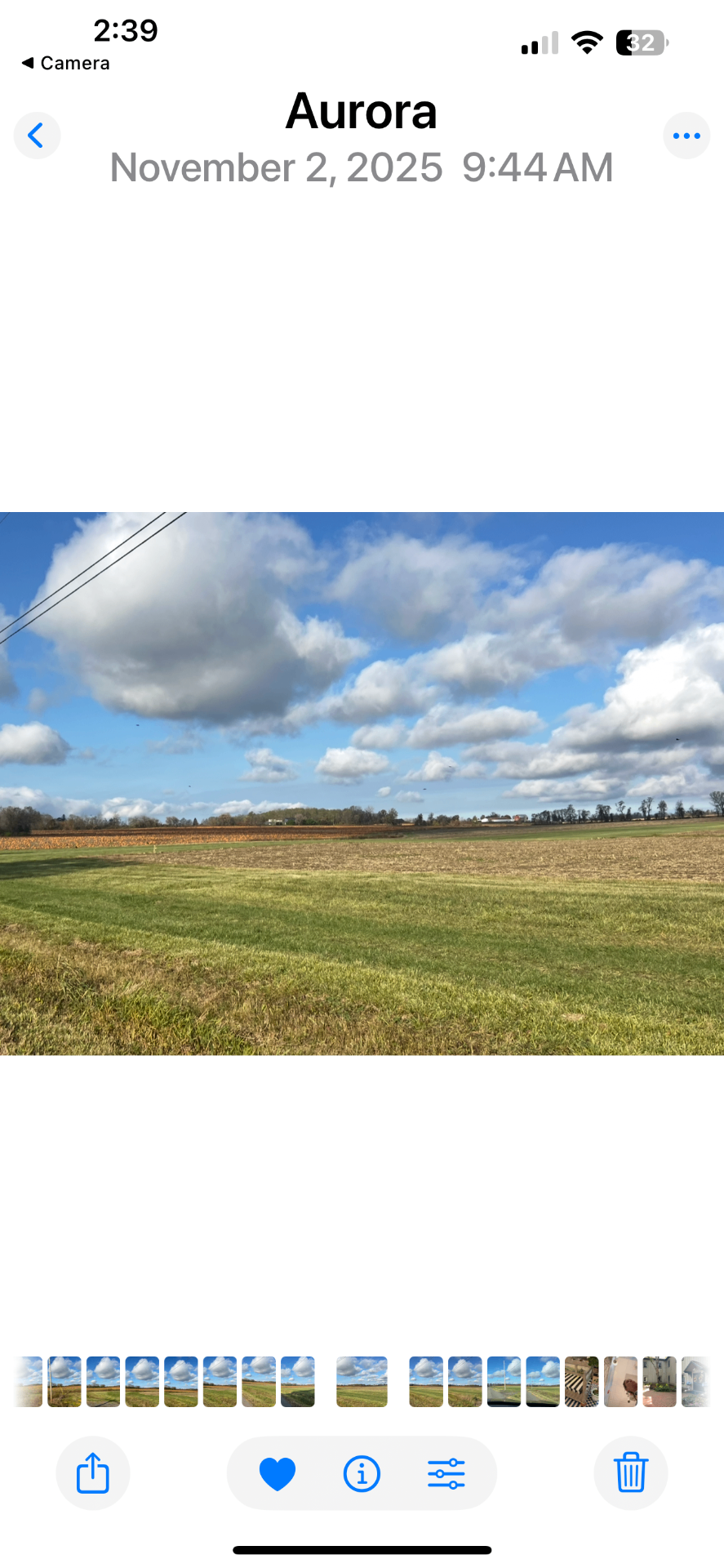
Leaving Aurora, you drive back through open Finger Lakes farmland — cornfields and pastures under an enormous sky, red barns off in the distance, and the kind of light that only exists in Central New York in the fall. It is a good hour of quiet after the sensory feast at the Farmhouse. By the time you cross back over the lake, you understand a little better why Victoria chose to build her whole world here. It is not just beautiful — it is quiet, unhurried, and undeniably American in the best way. If you love Nantucket, you will love Aurora. It has the same bones: water, weathered clapboard, hand-painted signs, gardens that spill onto the road, and a slow rhythm you don't want to leave.
Bring the Farmhouse Home
You cannot pack the porch or the tulip beds into your car, but you can bring home a small piece of Aurora. These are the MacKenzie-Childs pieces I keep coming back to — hand-painted, hand-glazed, and made in the same studios I walked through that afternoon.
Shop
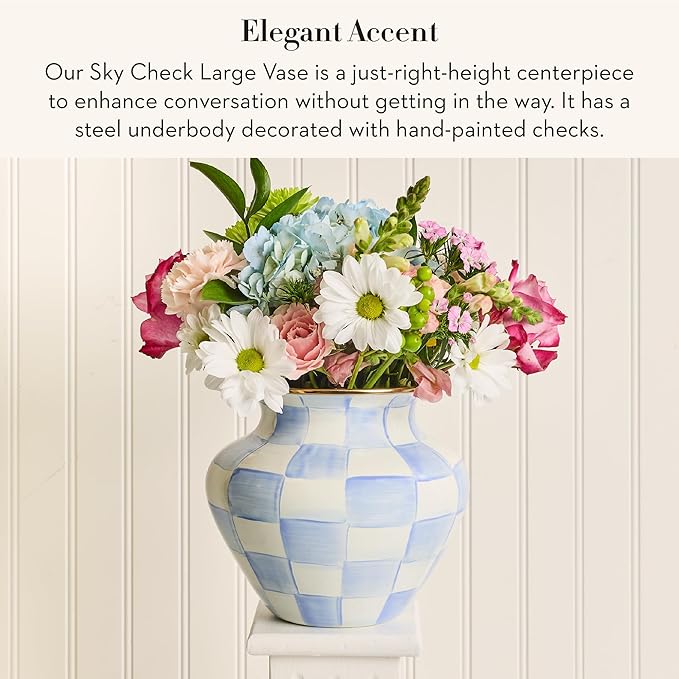
MacKenzie-Childs Sky Check Enamel Large Flower Vase (Light Blue & White)
$148
Shop
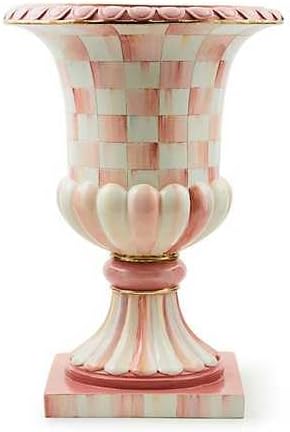
MacKenzie-Childs Rosy Check Pedestal Tabletop Urn (Tall, Pink-and-White)
$198
Shop
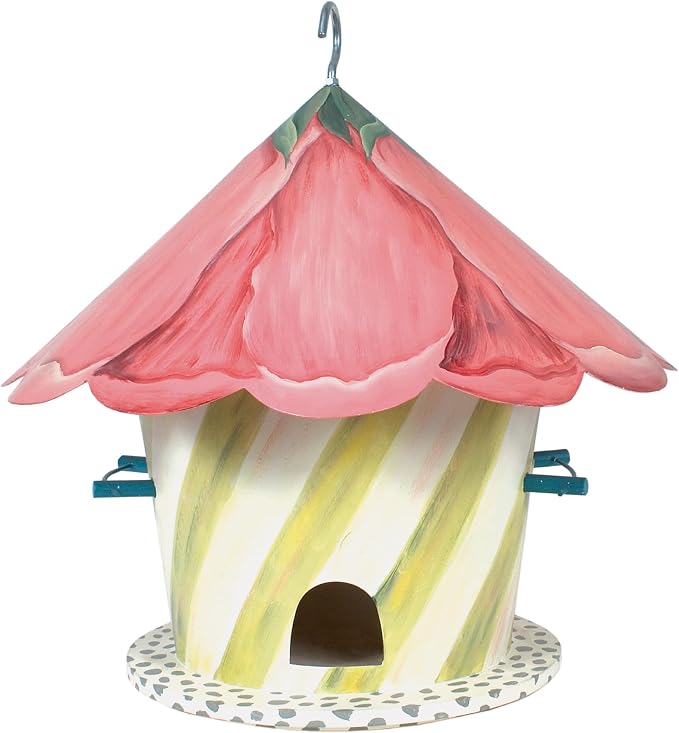
MacKenzie-Childs Hollyhock Birdhouse
$199.95
Shop
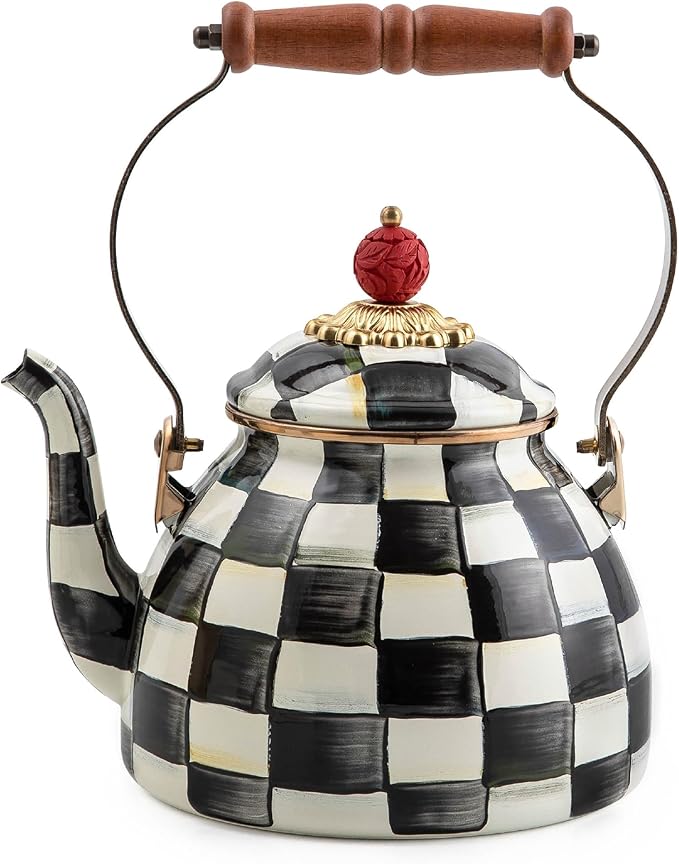
MacKenzie-Childs Courtly Check Enamel Tea Kettle (2 qt)
$148
Shop
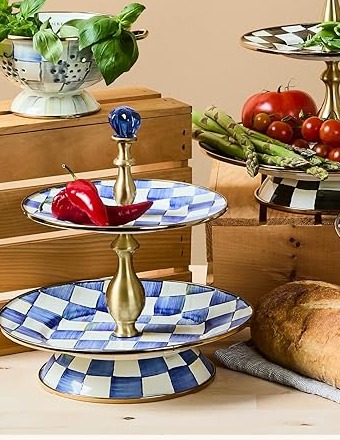
MacKenzie-Childs Royal Check Two-Tier Cake Stand
$168
Shop
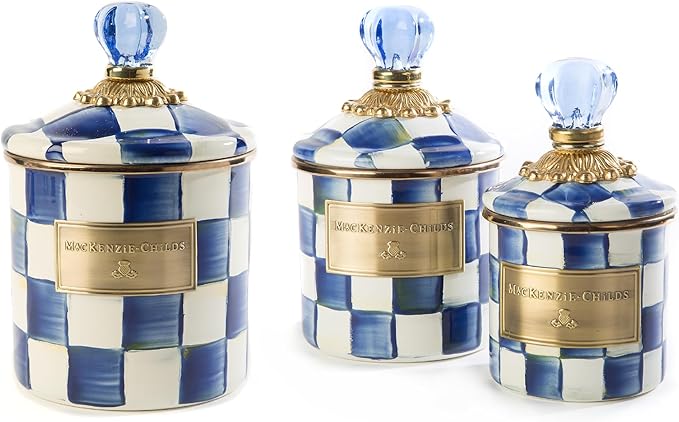
MacKenzie-Childs Royal Check Enamel Canisters (Set of 3)
$248

Planning Your Visit
The MacKenzie-Childs Farmhouse and Store are located at 3260 State Route 90 in Aurora, New York — about an hour north of Ithaca and a scenic three-hour drive from either New York City or Buffalo. The Store is open daily (hours shift by season, so check ahead), and Farmhouse tours run seasonally on select days for a small fee that goes toward preservation. Pair the visit with lunch at The Inn at Aurora, a walk along the Wells College lakefront, and a stop for wine at one of the Cayuga Lake wineries on the drive back. Go in May for the tulips, in June for the catmint, in July for the hydrangeas, and in October for the fall foliage — honestly, there is no wrong time.
I have been to a lot of home stores. I have never been to one where I wanted to stay for the day. Aurora is that rare kind of place where the brand and the town are inseparable — where the checked urns on the front porch are the same ones being painted a hundred feet away, and where a small village on a Finger Lake still feels like a well-kept secret. Take the drive. Bring a camera. Buy the teapot.
Nantucket Charm is a participant in the Amazon Associates program. We may earn a small commission on purchases made through links in this story, at no extra cost to you.