Design & History · 6 min read · October 21, 2026
Chinoiserie, Nantucket & the Art of Timeless Blue and White
From Chinese porcelain and European decorative art to Nantucket’s seafaring connections — the story behind a blue-and-white classic, and why it still feels at home today.
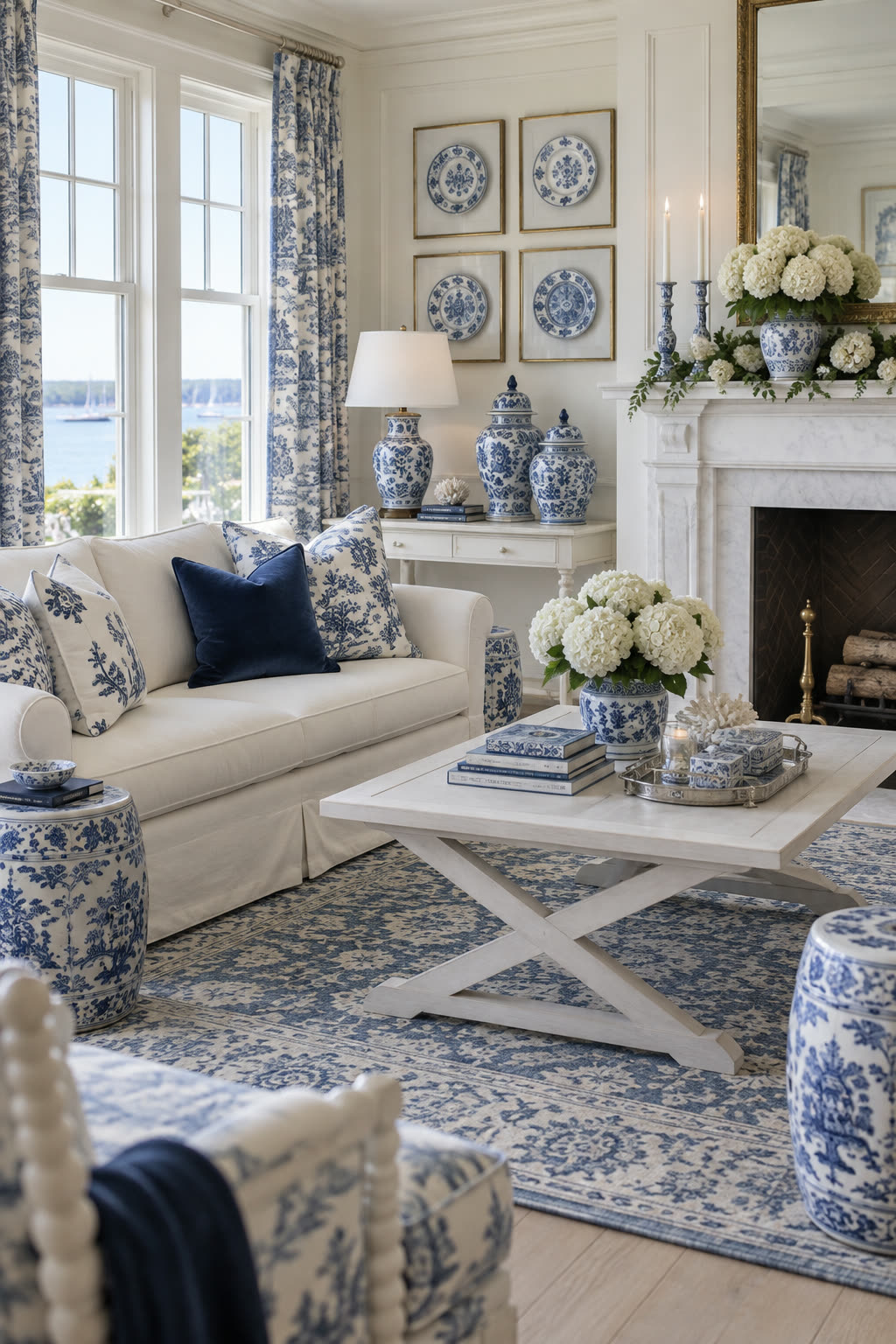
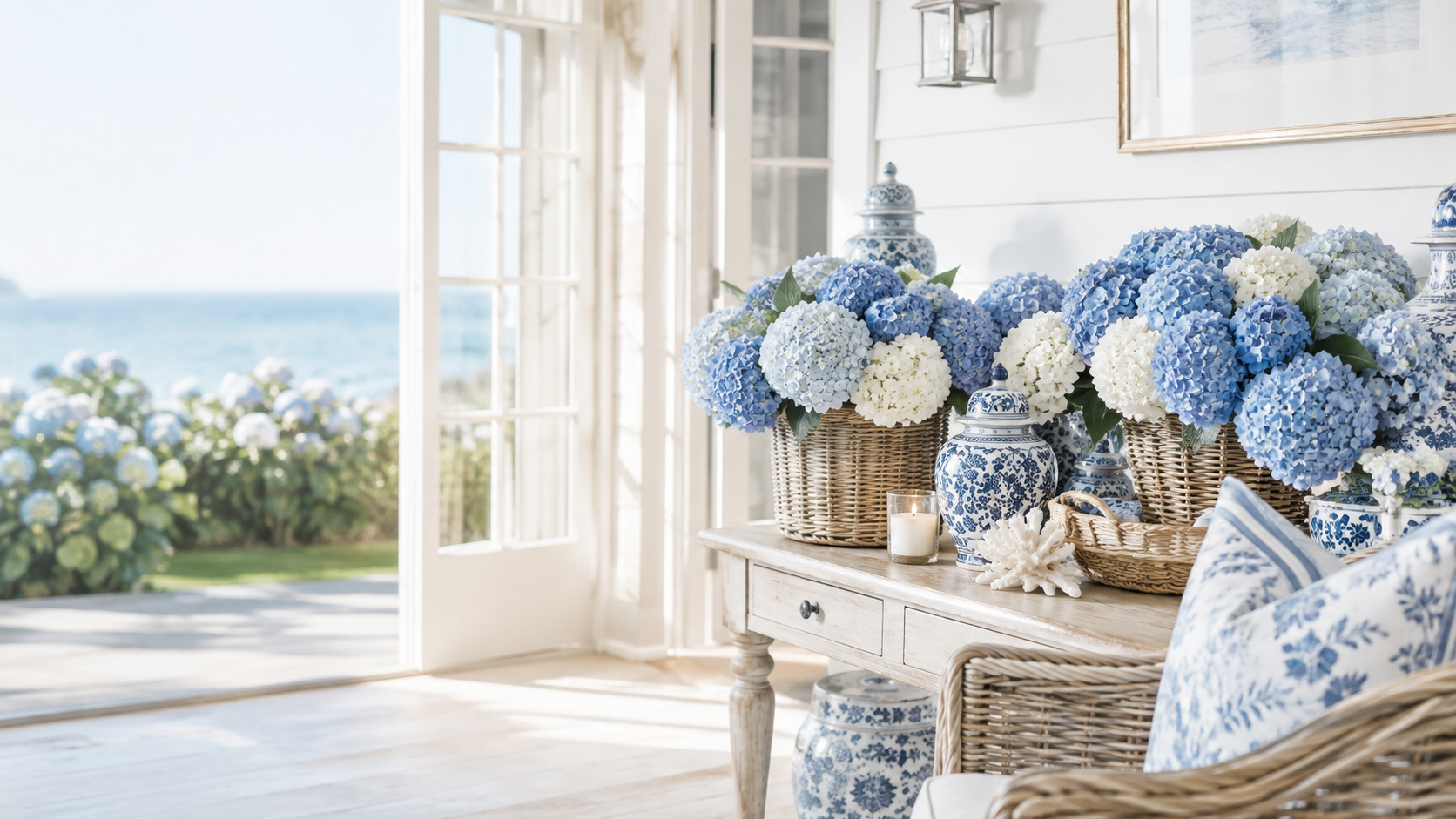
A styled Nantucket Charm inspiration scene, not a photograph of a historic Nantucket interior.
A blue-and-white ginger jar filled with hydrangeas. A porcelain lamp beside a comfortable reading chair. A patterned plate resting on a shelf, as lovely on an ordinary Wednesday as it is when guests arrive. These are small details, but they give a room something larger: a sense of continuity. In the Nantucket-inspired home, chinoiserie feels neither like a passing fashion nor a formal museum piece. It is a way to bring pattern, craftsmanship, and a little romance into everyday life. Its story, however, begins far beyond New England’s shores.
Before the style had a name, there was the porcelain
Long before European decorators fell in love with blue and white, Chinese makers had developed a rich porcelain tradition. Chinese ceramics, along with lacquerware and silk, reached Europe through trade from the sixteenth century onward. Their fine surfaces, intricate decoration, and unfamiliar forms attracted collectors and inspired craftspeople. The blue-and-white vessel we admire today belongs to a much larger history of Chinese artistry and international exchange. It is worth remembering that origin: this beauty was not invented in a European drawing room.

What chinoiserie actually means
Chinoiserie is a French term for a European decorative style inspired by China and, often, other parts of Asia. It took shape in the seventeenth century and became especially fashionable in the eighteenth. Designers adapted birds, blossoming branches, garden scenes, pagodas, and other motifs for furniture, wallpaper, ceramics, and interiors. Many of those scenes were imagined rather than accurate portrayals of Chinese life; European makers sometimes blended influences from different Asian cultures. Chinese-made porcelain and European chinoiserie are therefore related, but not interchangeable. Today, decorating language often uses chinoiserie more broadly for this family of patterned, Asian-inspired pieces. Understanding the distinction lets us enjoy the style while honoring the craftsmanship and cultures behind it.
An island connected to a much wider world
Nantucket may look wonderfully self-contained, with its shingled houses and harbor views, but its history reaches far beyond the island. The Nantucket Historical Association describes the whaling and trading networks Nantucketers built from the late eighteenth century, and its collections include objects from China. Its Decorative Arts exhibition also documents major China Trade ceramics alongside European pieces. These surviving objects provide a tangible connection between Nantucket and the wider exchange of goods and ideas. That is the meaningful link: an island whose maritime history helped connect local lives with a much larger world. It does not mean that every Nantucket captain brought home a ginger jar, or that every island house contains chinoiserie. The documented history is interesting enough without turning it into a decorating legend.
Why blue and white feels so natural here
The historical connection is one part of the story; the visual harmony is another. Blue and white sits beautifully beside the materials we associate with Nantucket style: painted wood, woven baskets, linen, weathered finishes, and summer hydrangeas. A porcelain lamp brings polish to an unfussy room. A patterned jar gives a plain console a focal point. Against a white slipcovered sofa, a blue botanical pillow adds detail without making the room feel heavy. This is our decorating interpretation, not a claim that all historic Nantucket interiors looked this way. The appeal is in the balance: something intricate beside something simple, something glossy beside something woven, something with a long design history in a room made for present-day comfort.

A classic that keeps making room for everyday life
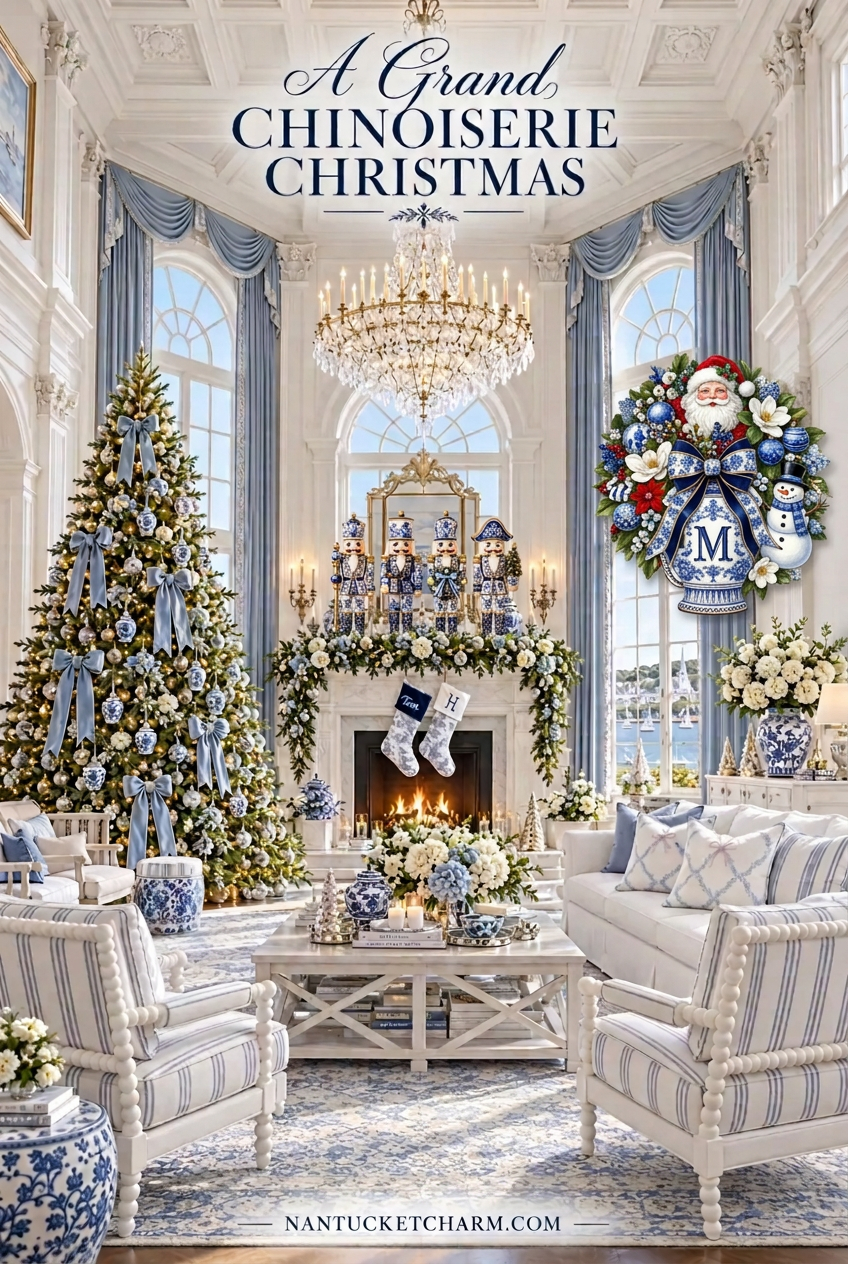
Timeless does not mean unchanged. It means a piece can belong to more than one chapter of your home. A blue-and-white jar can hold hydrangeas in summer, autumn branches later in the year, and greenery at Christmas. A porcelain lamp works beside a traditional chair or a freshly upholstered sofa. Pattern can move from a dinner plate to a pillow while the room’s color story remains calm. Blue and white also welcomes other materials: wicker for warmth, silver for sparkle, velvet for winter, and crisp cotton when the windows are open. Its enduring appeal is not a promise that fashion will never change. It is the freedom to refresh a room without starting over.

Bring the look home, one thoughtful layer at a time
Begin with a piece you genuinely love rather than a room full of matching accessories. A ginger jar, a porcelain lamp, or a floral tray can establish the blue-and-white thread. Then soften it with a striped textile and a natural texture. For a small table, try three elements: a vessel of flowers, a stack of books, and a candle placed safely away from the blooms. On a larger coffee table, build a five-part arrangement with a tray, books, flowers, candlelight, and one personal object. Give each piece room to be seen. Toile can be a lovely companion, but it has its own history; not every toile print is chinoiserie. Choose the patterns for the way they speak to one another, not because they share a label.


Perhaps that is why chinoiserie feels so comfortable in the Nantucket-inspired home. It brings a sense of the wider world into a room that feels deeply personal. It invites us to notice the curve of a vessel, the drawing of a branch, the pleasure of setting a table beautifully. Not every home needs it, and no home needs all of it. But one well-loved blue-and-white piece can be the beginning of a style that grows with you — graceful, collected, and never in a hurry.
Sources & Further Reading
Nantucket Charm is a participant in the Amazon Associates program. We may earn a small commission on purchases made through links in this story, at no extra cost to you.