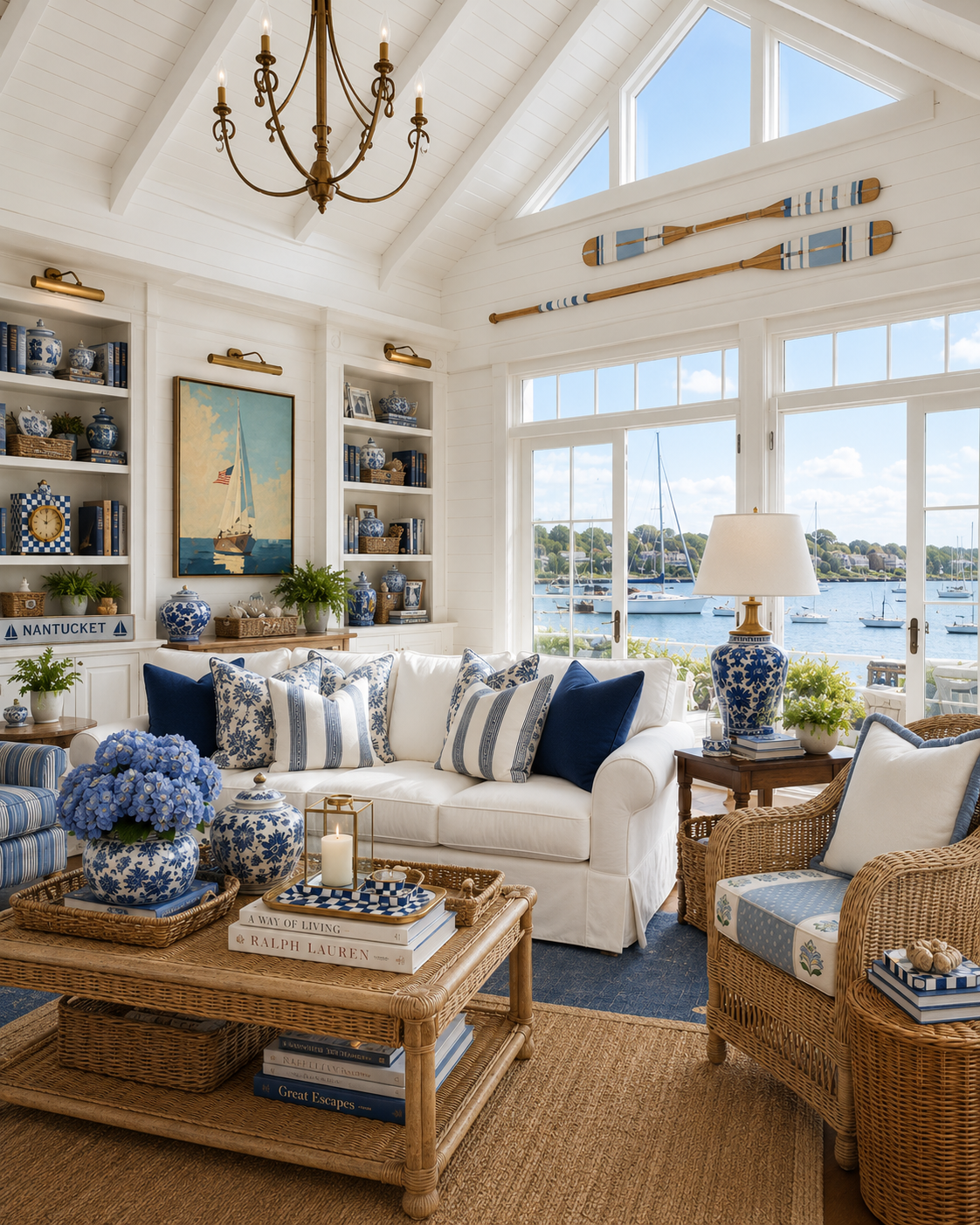
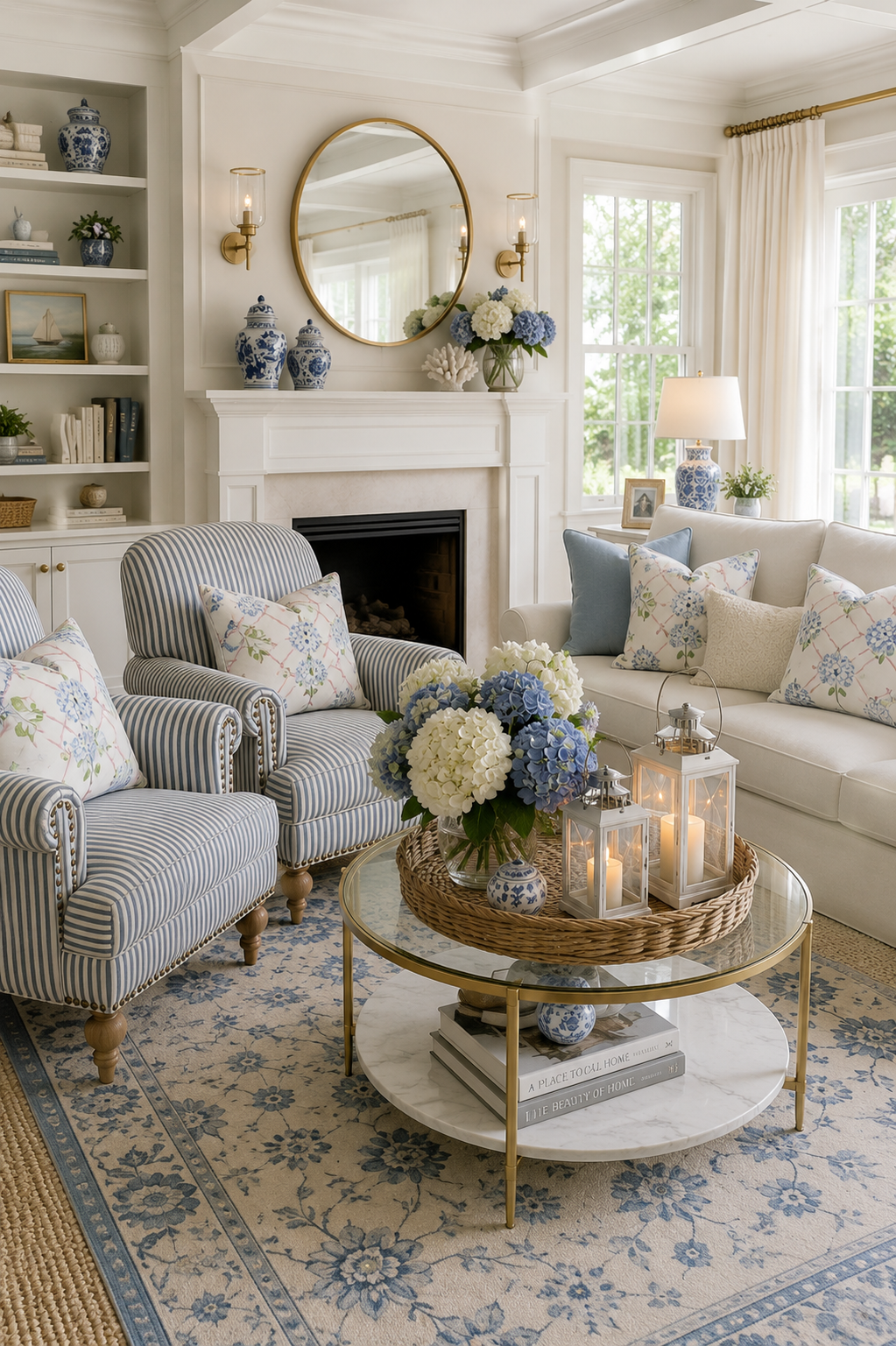
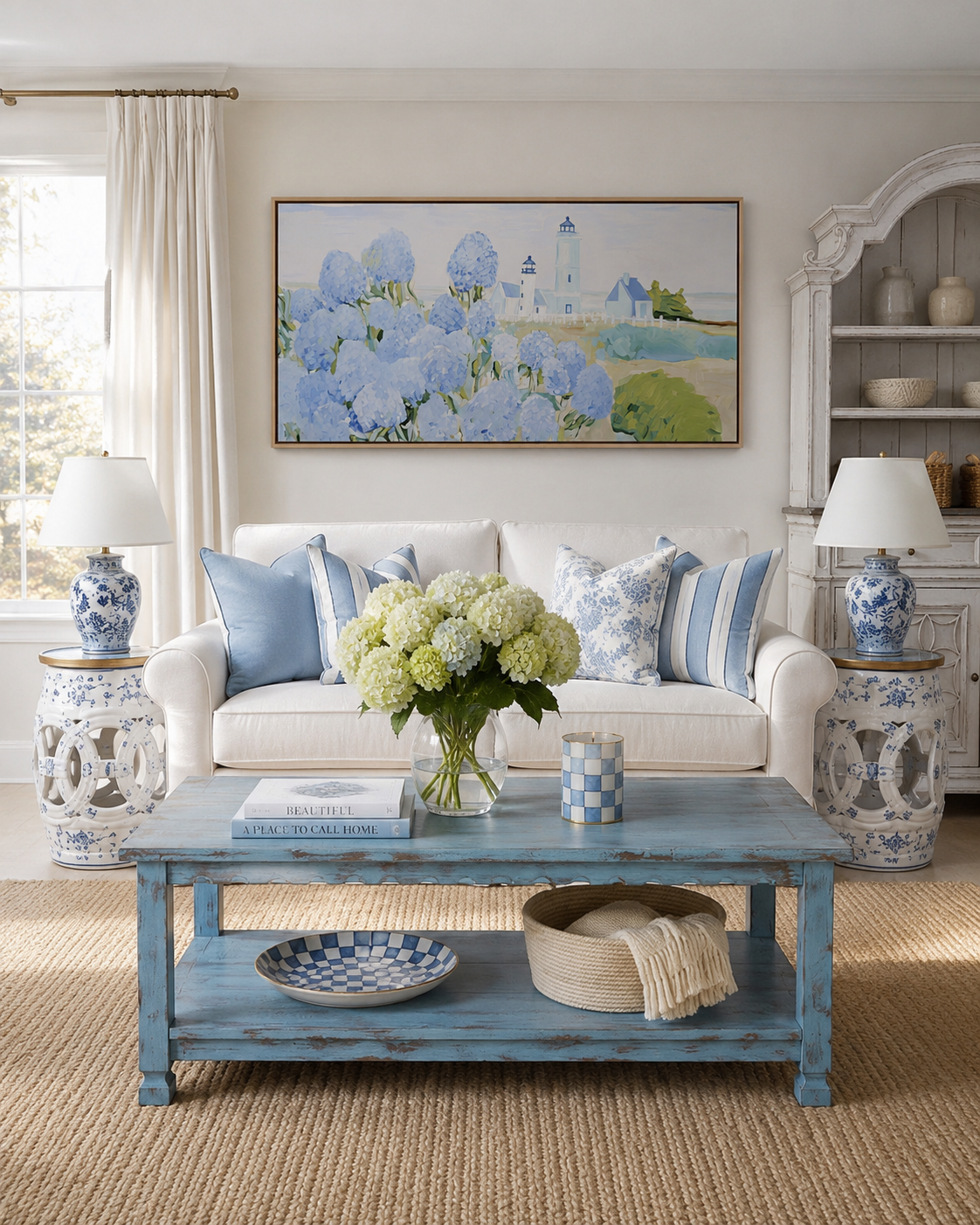
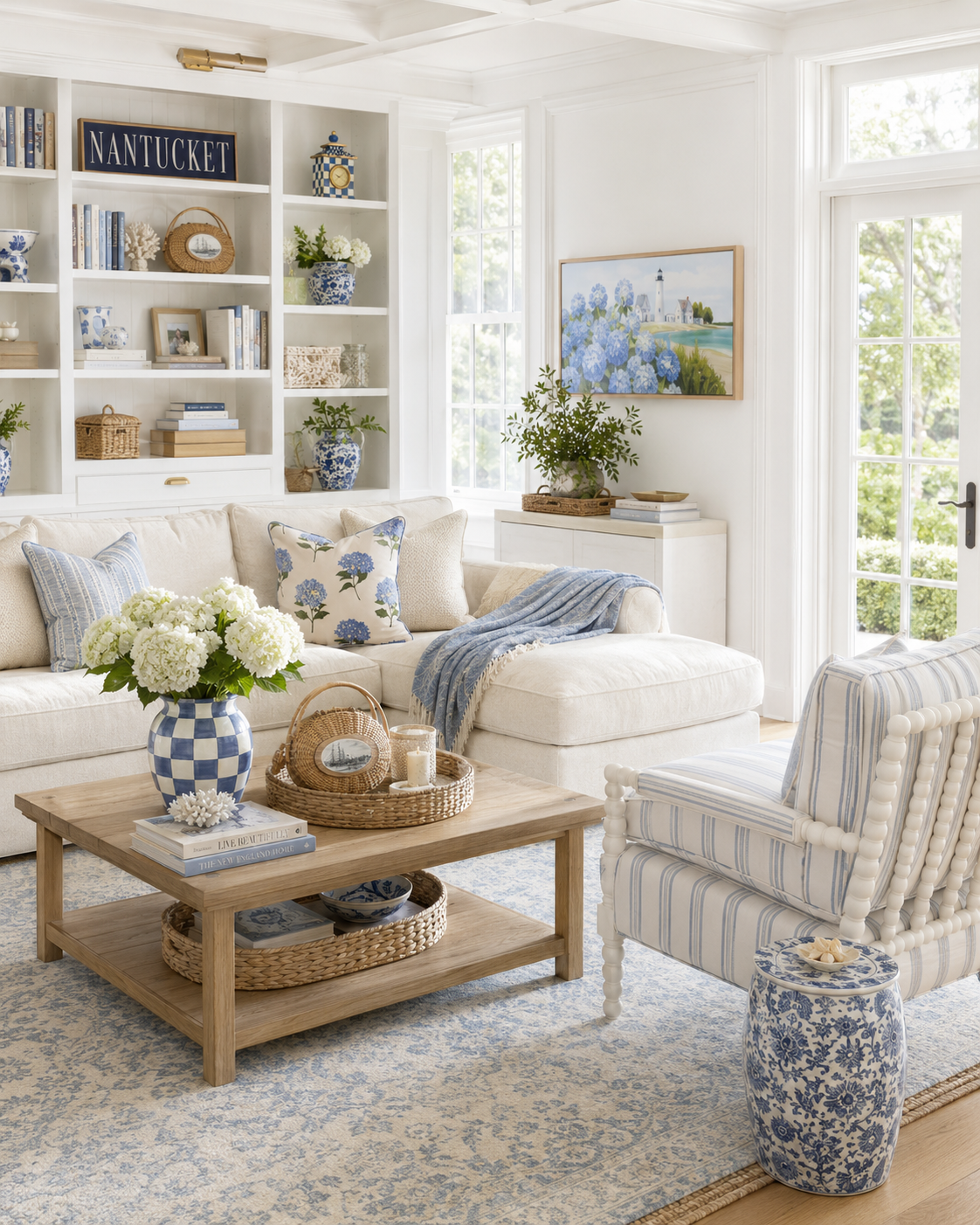
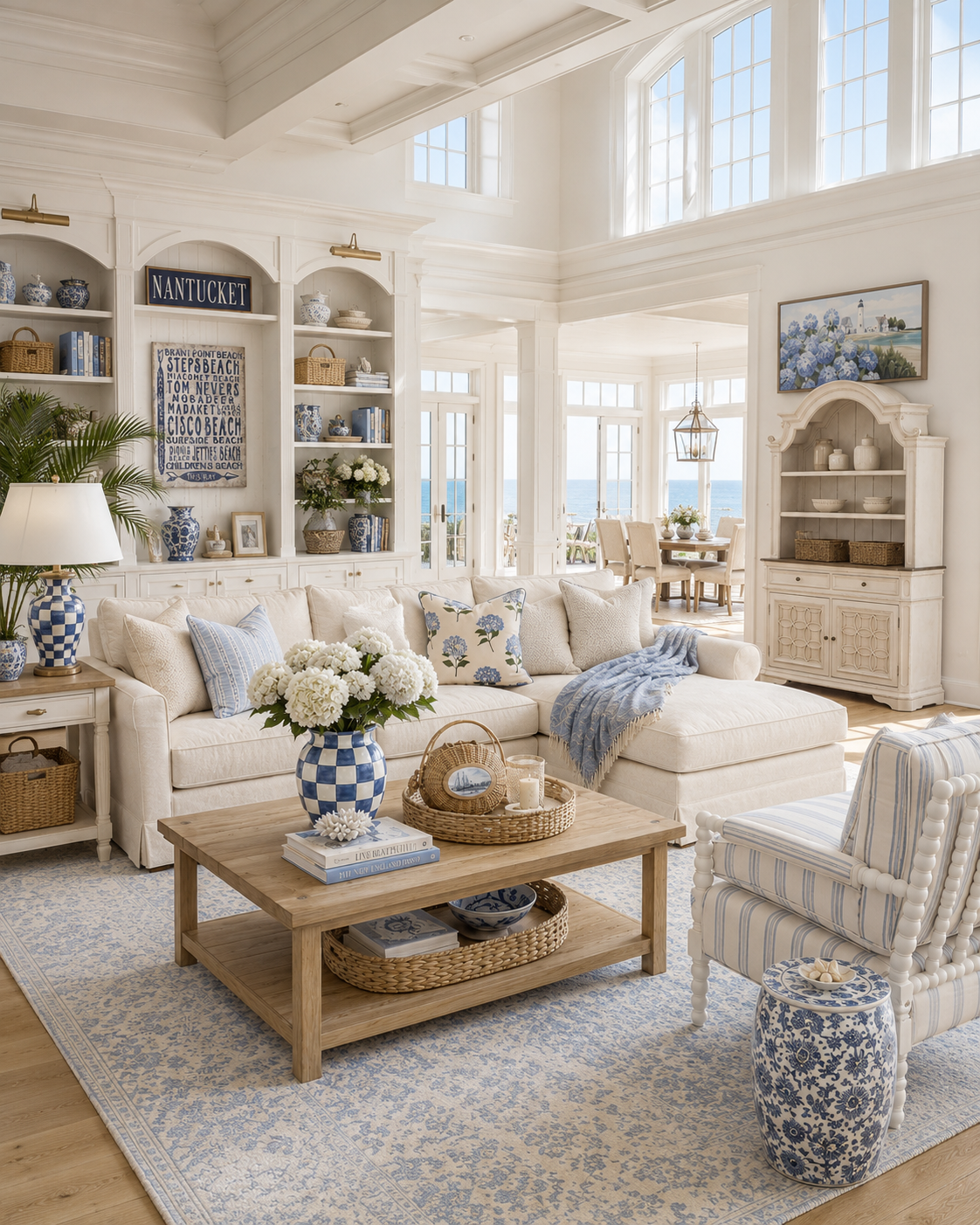
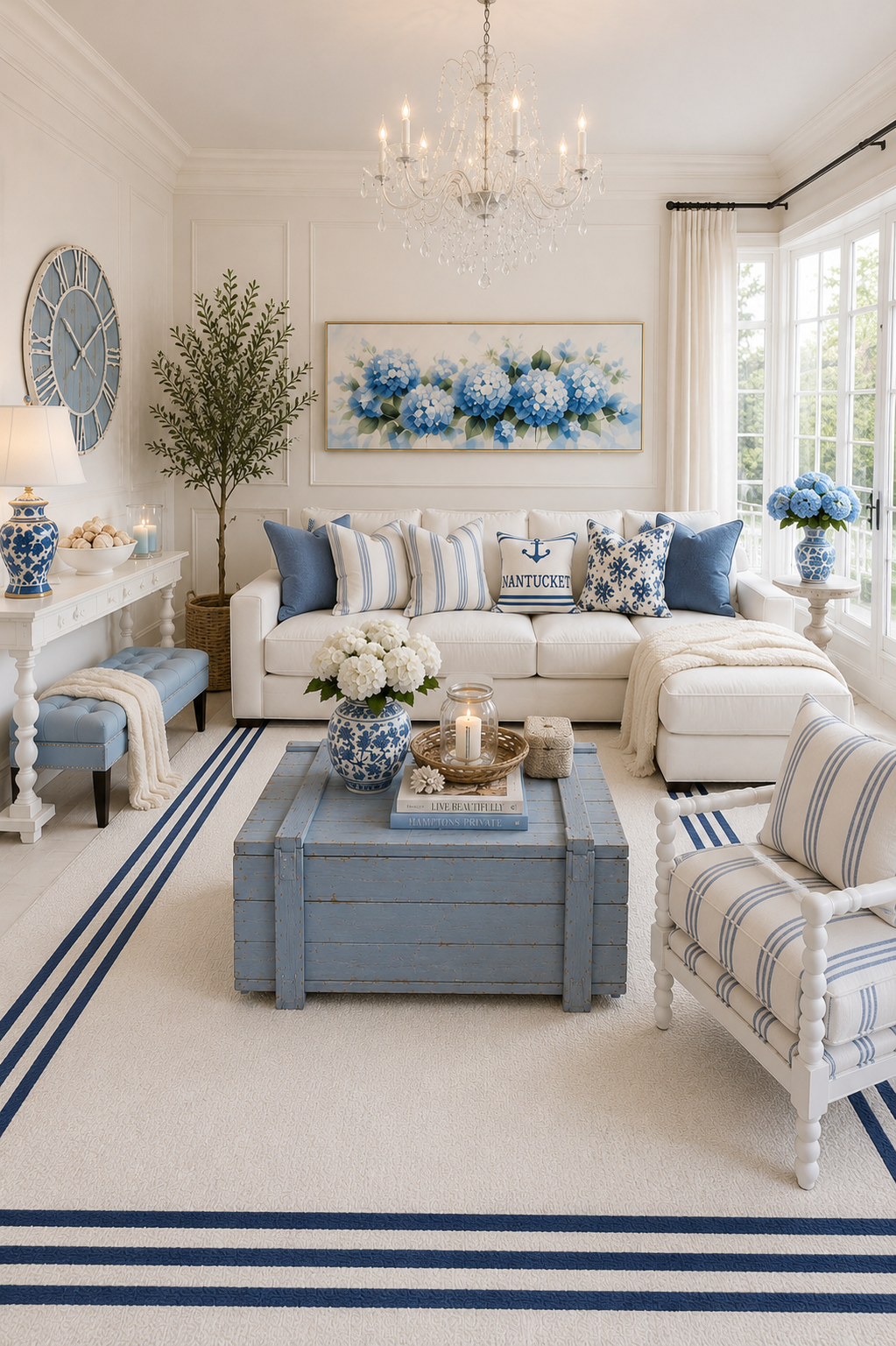
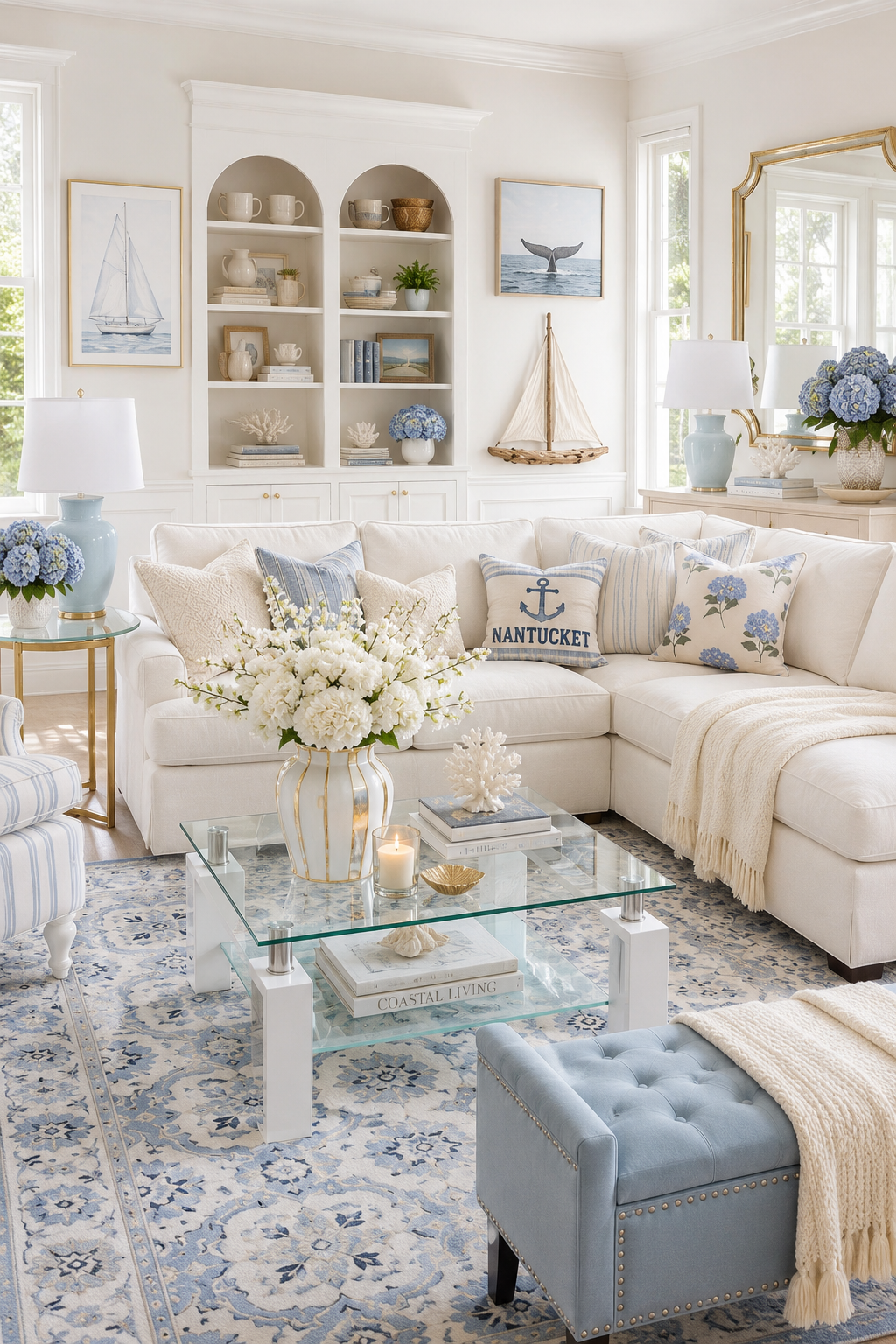
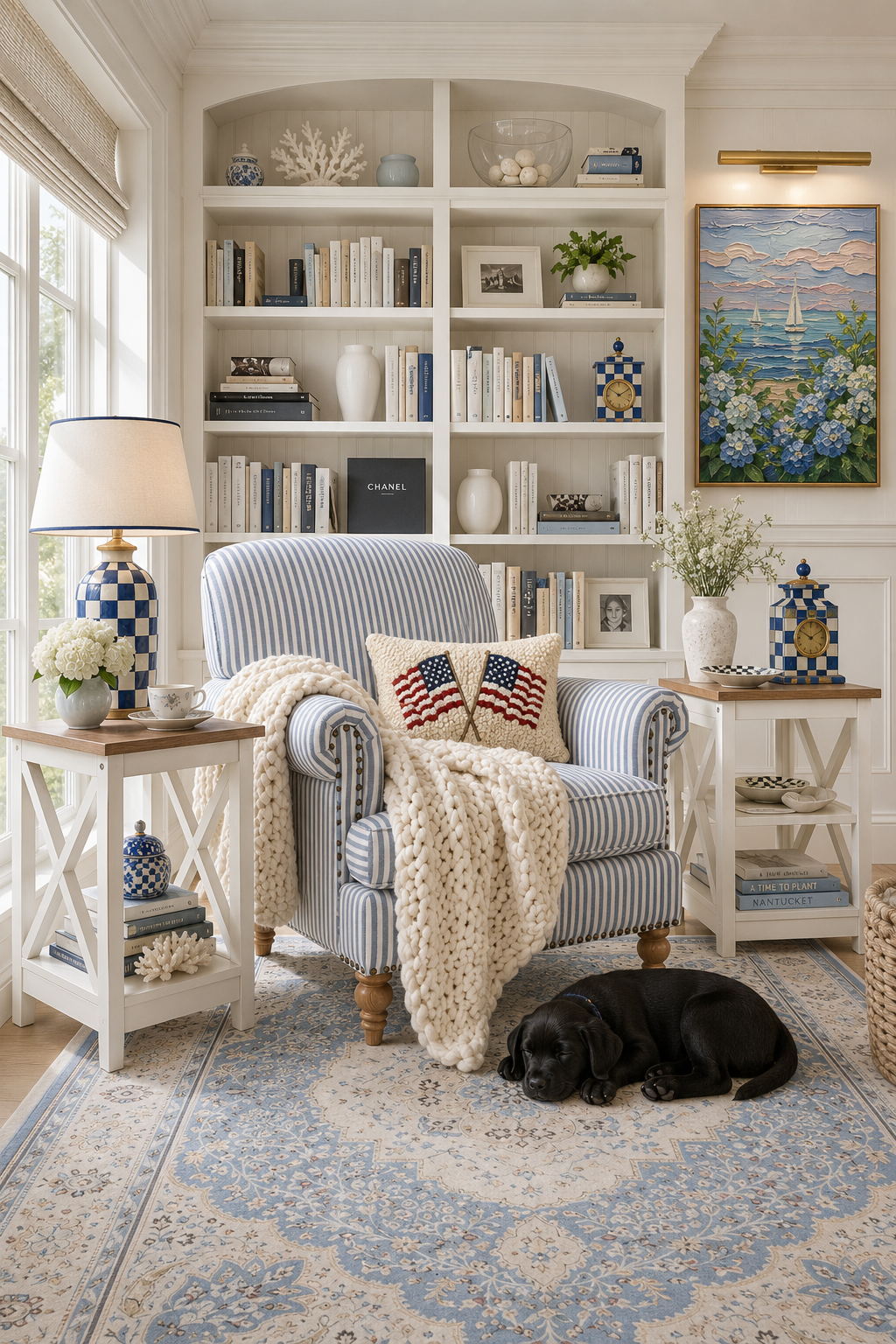
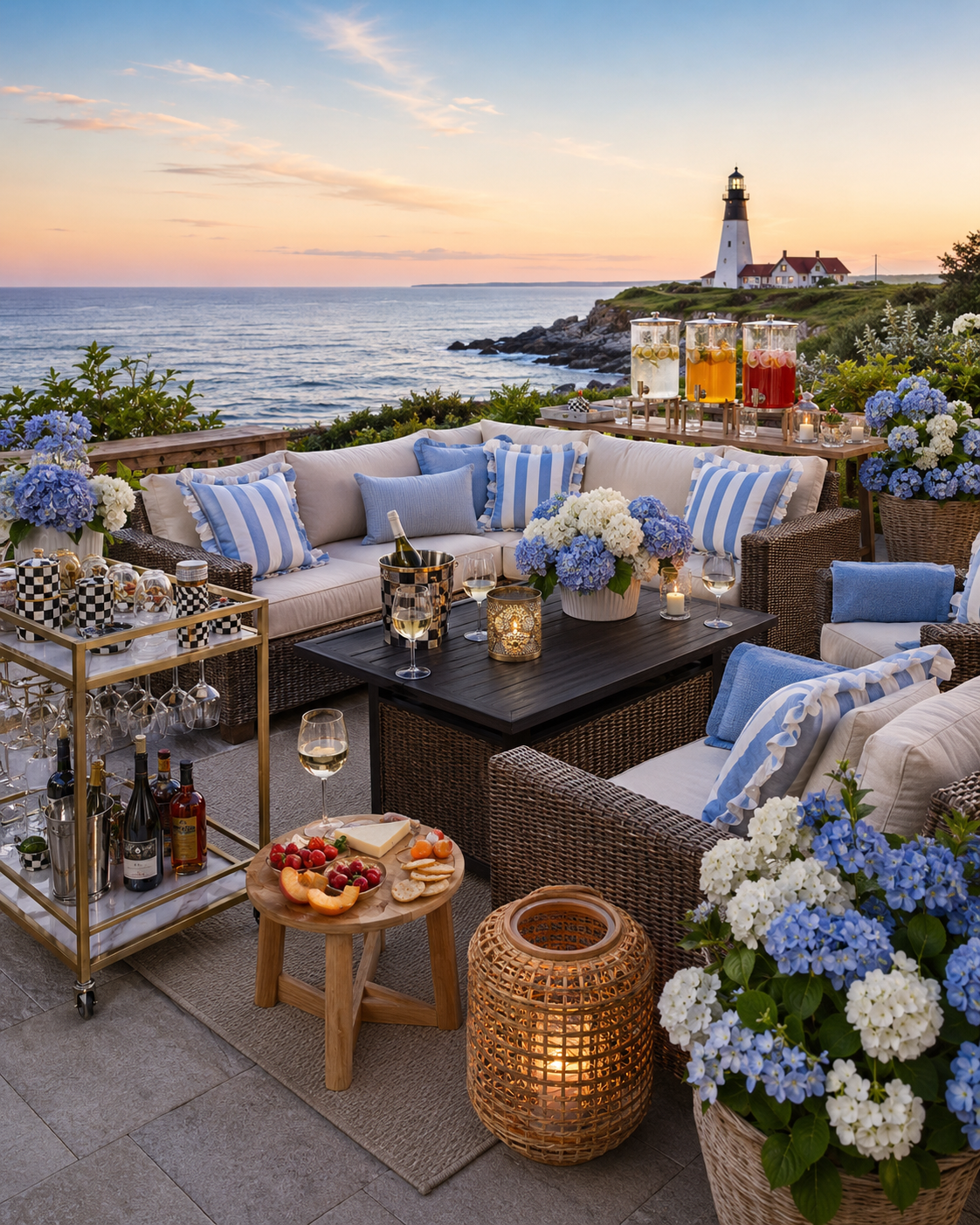
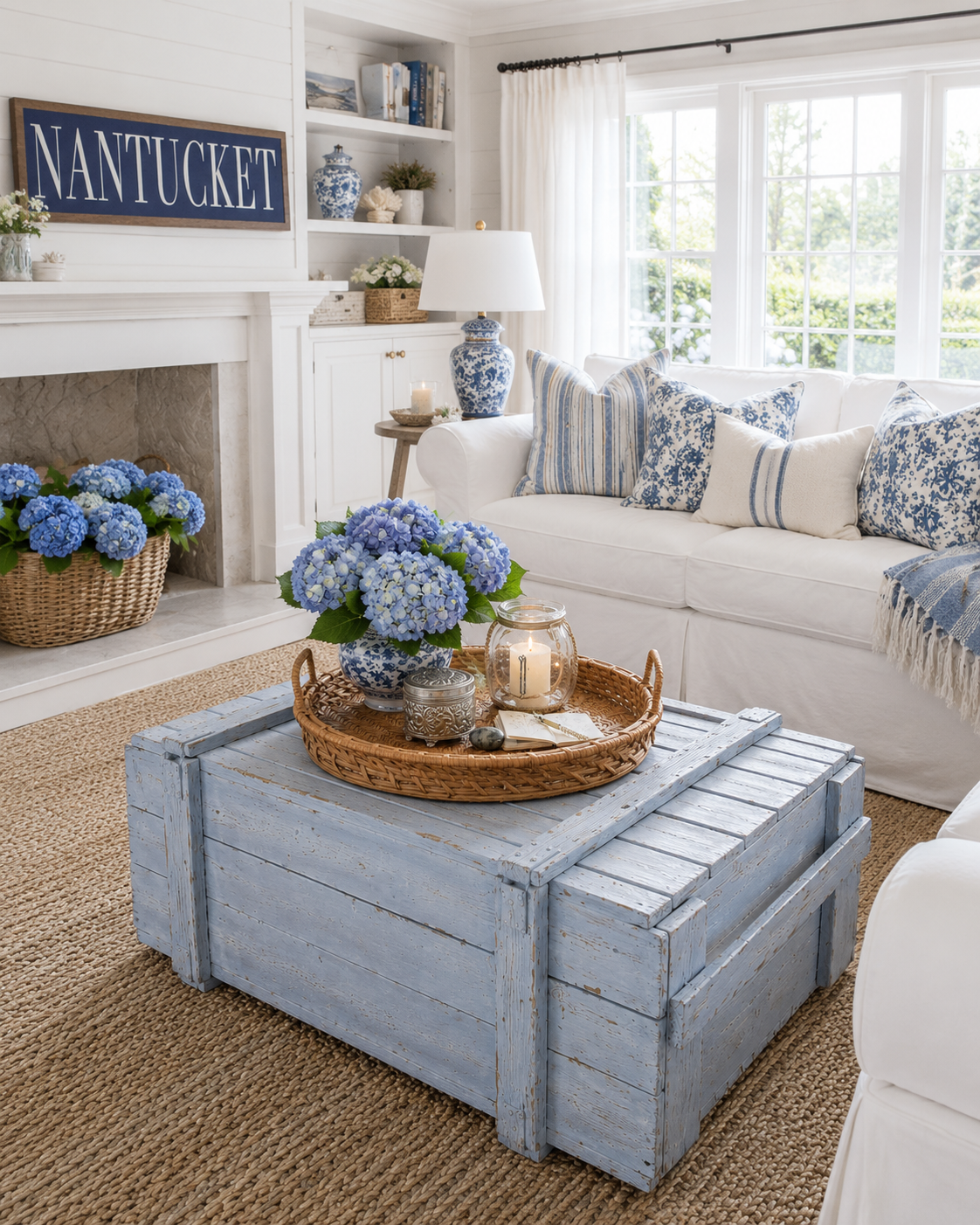
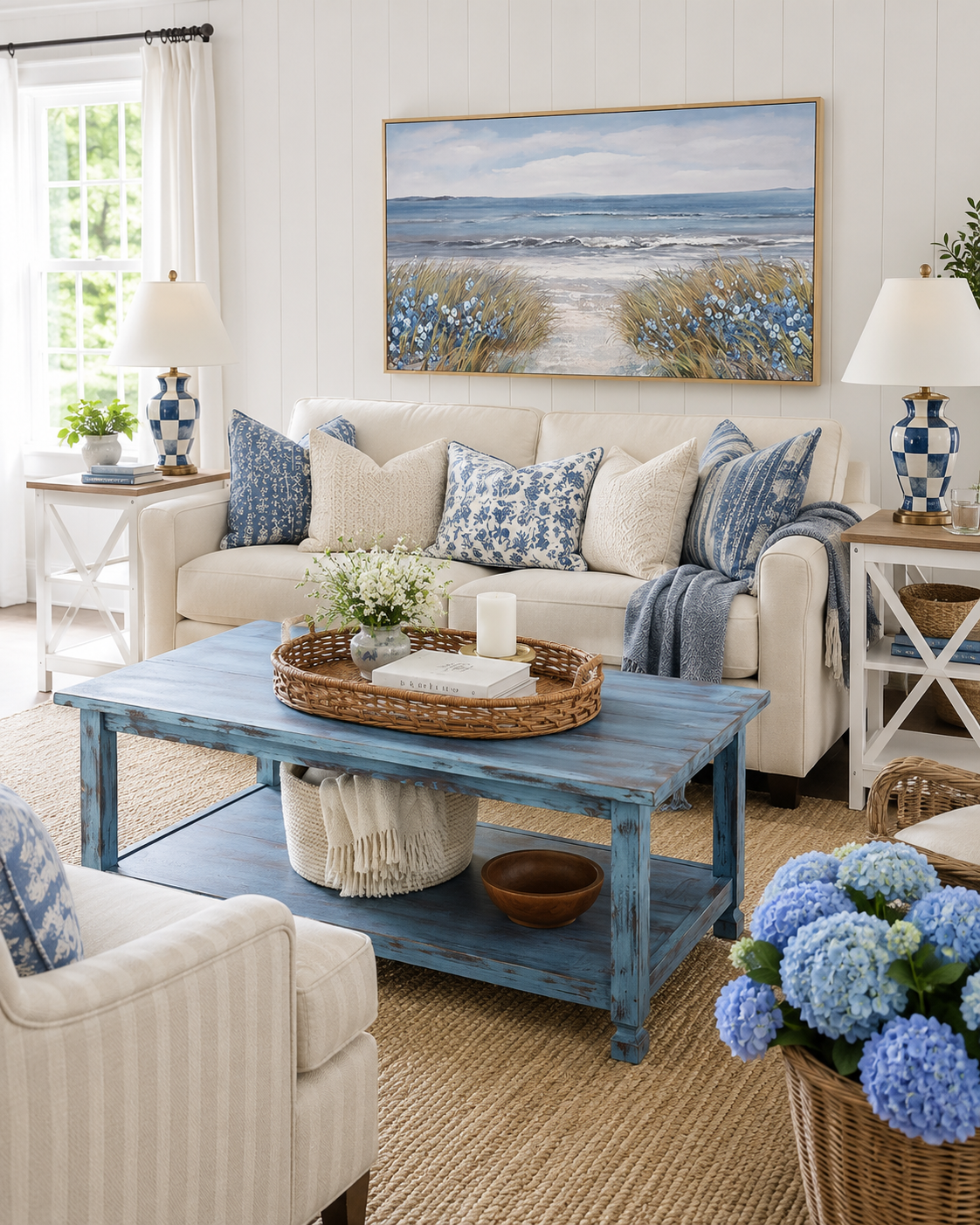
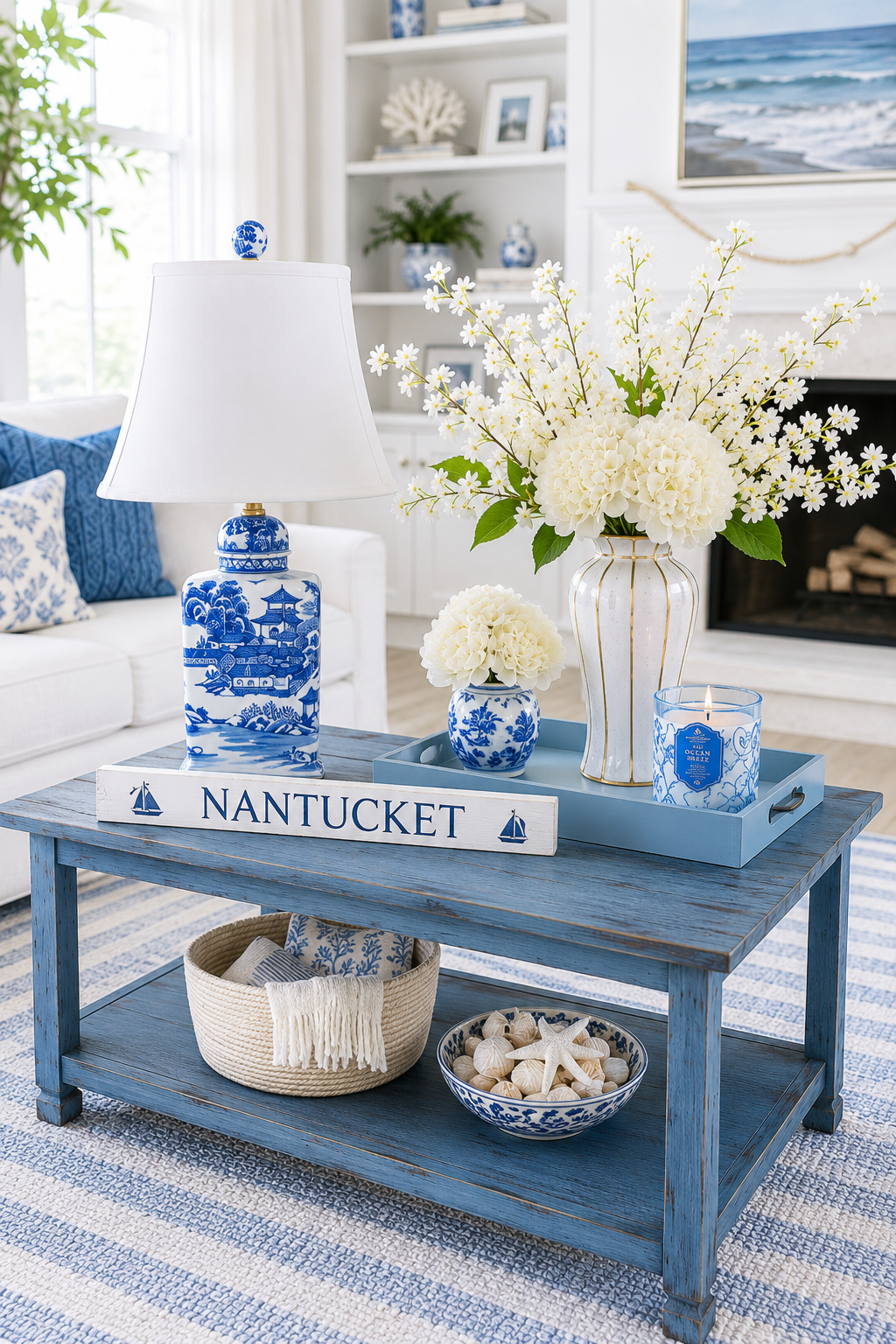
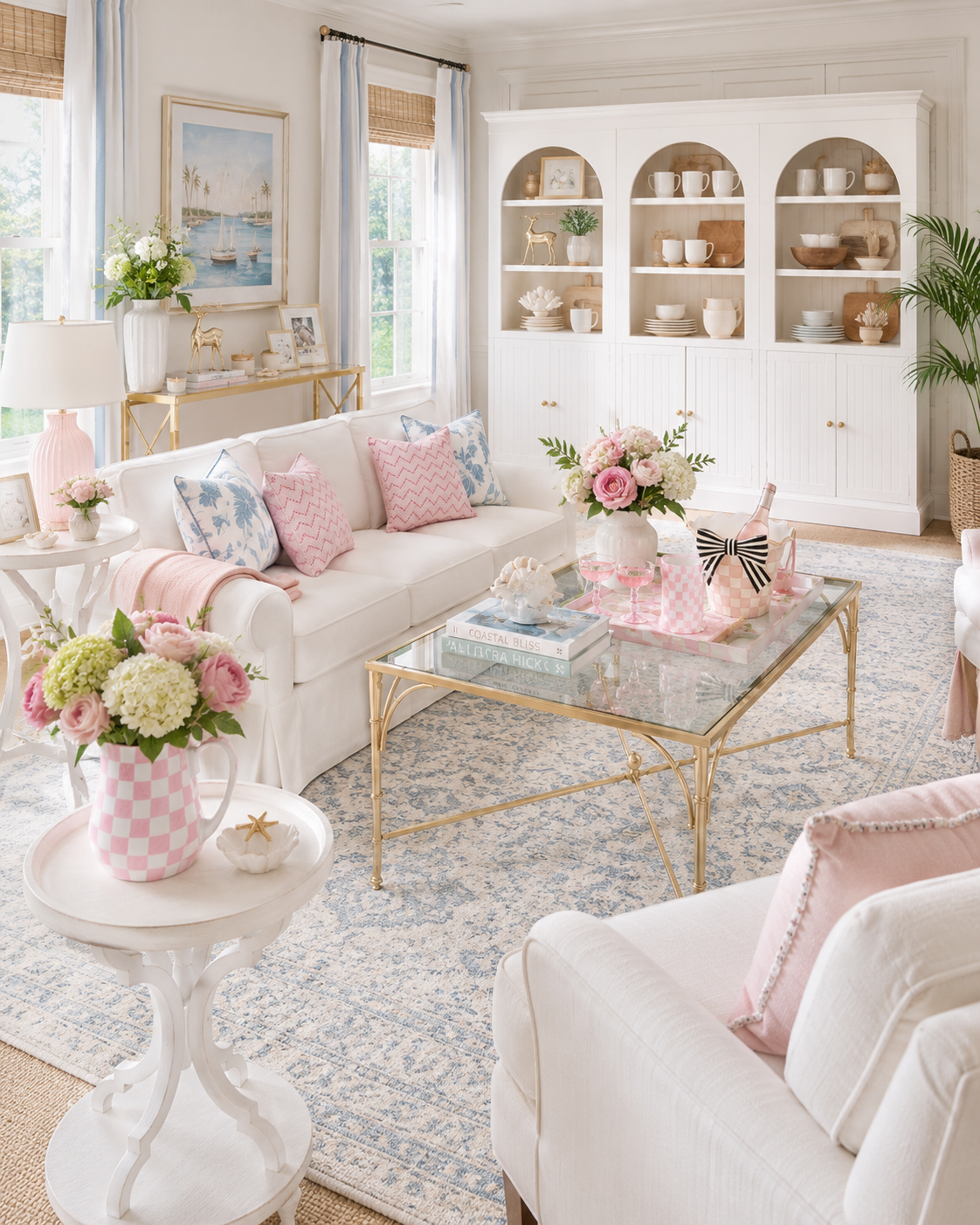
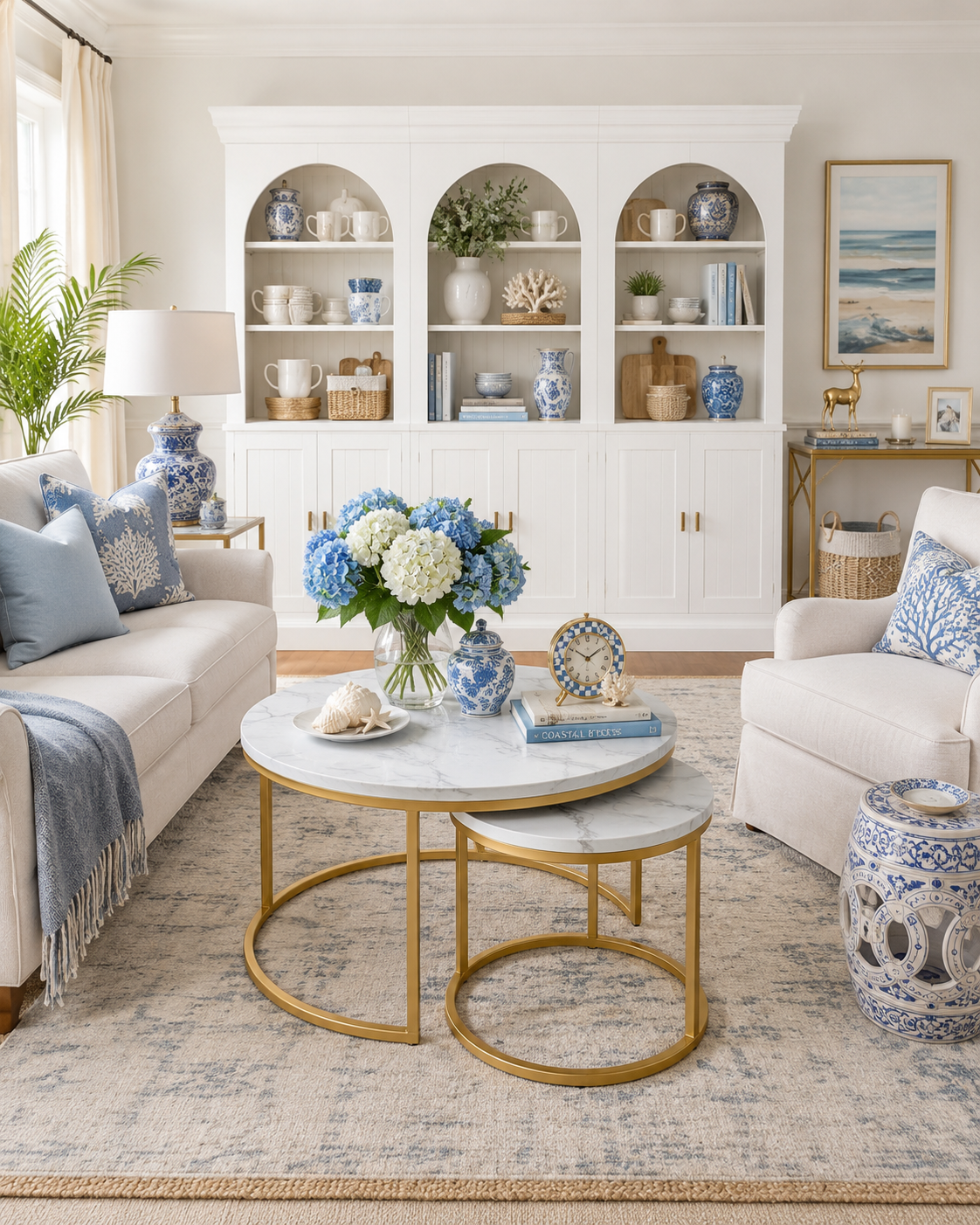
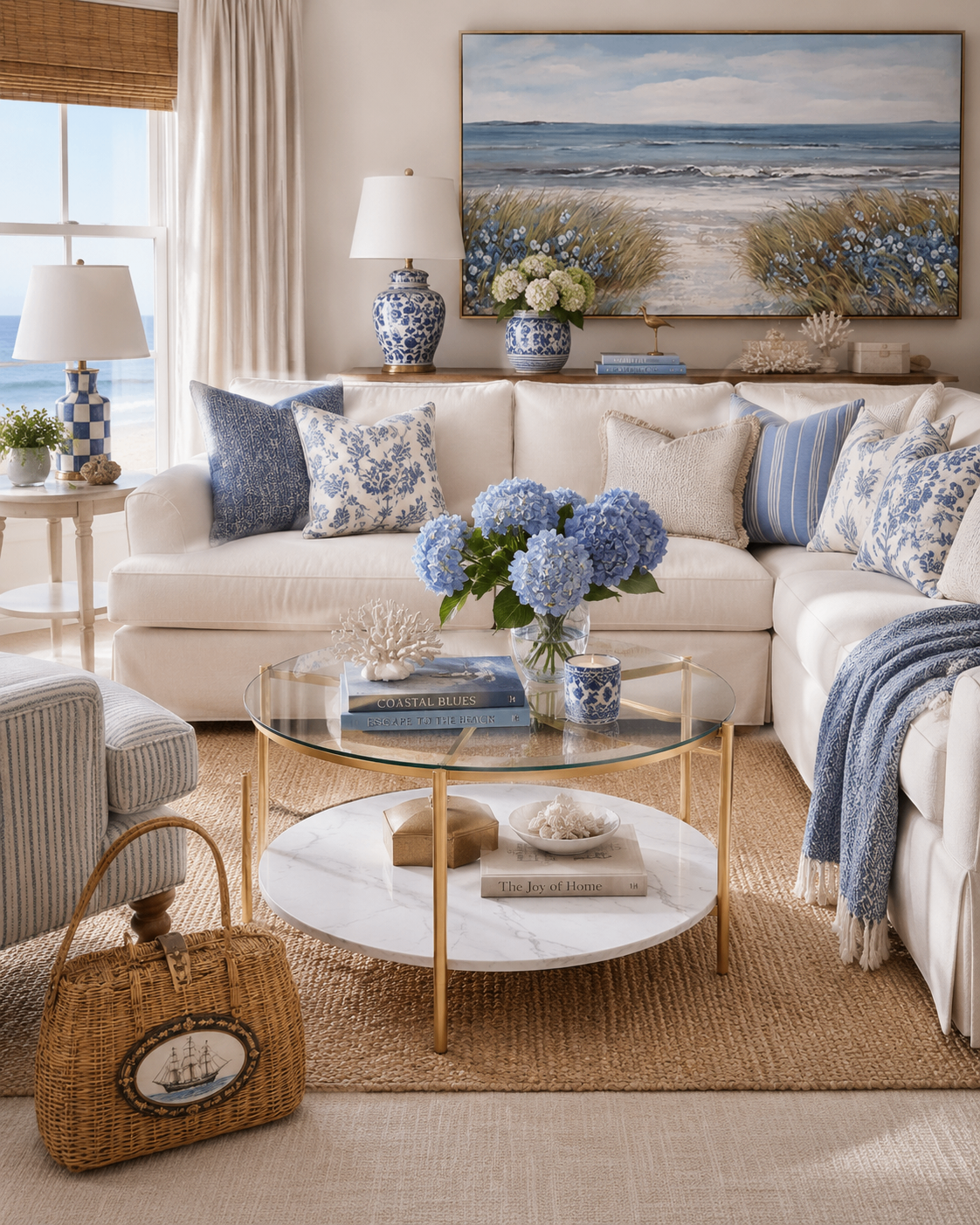
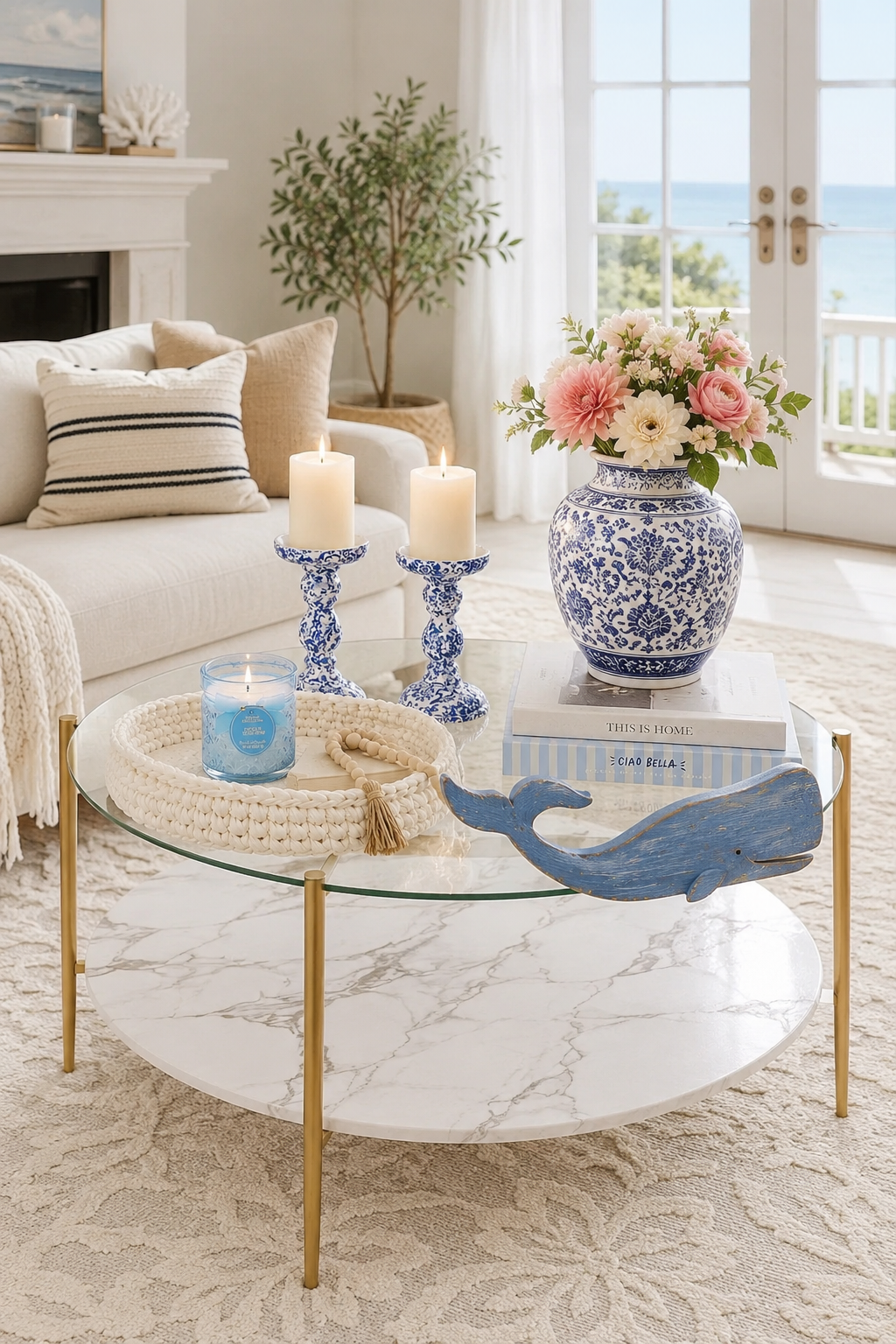
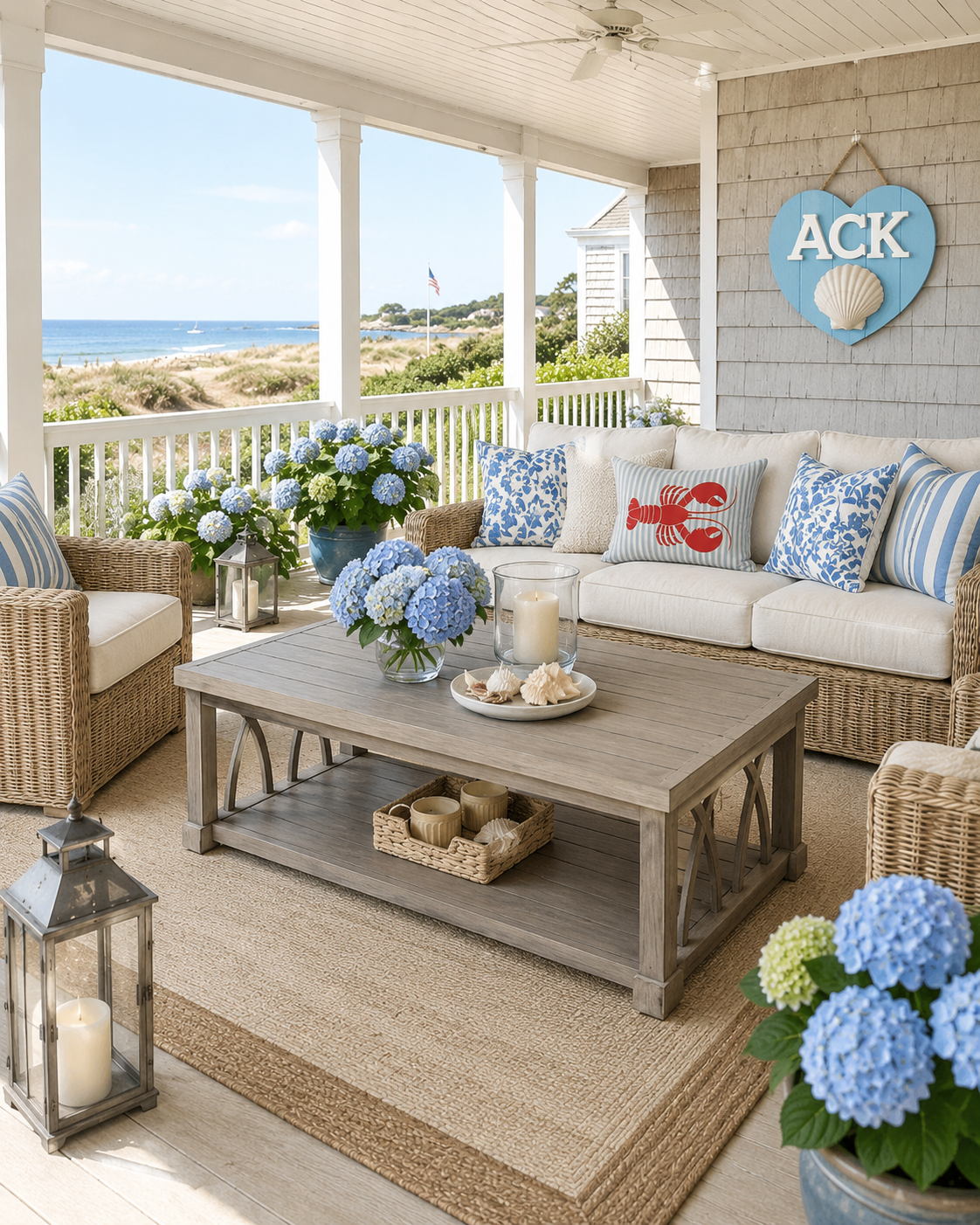
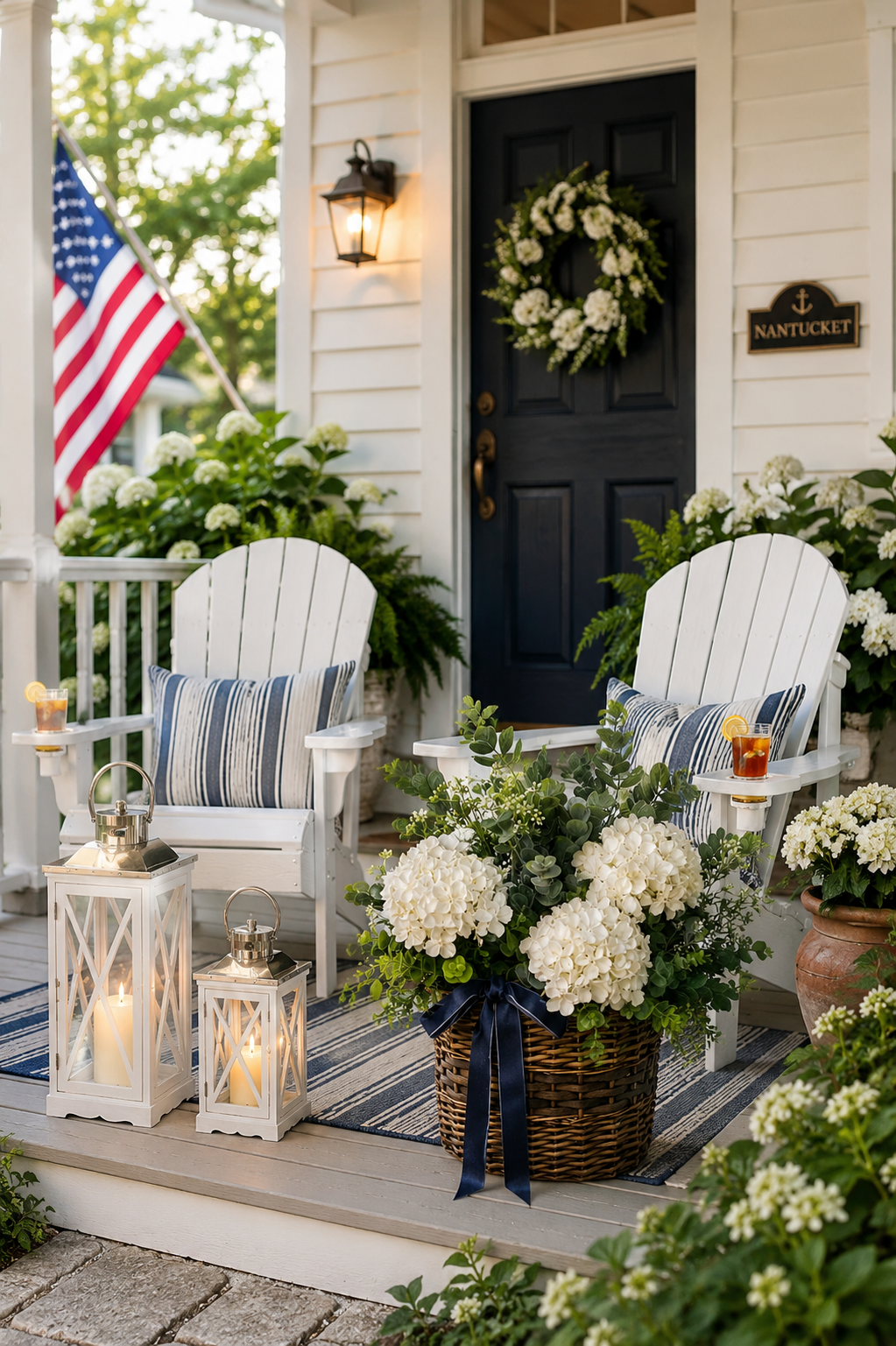
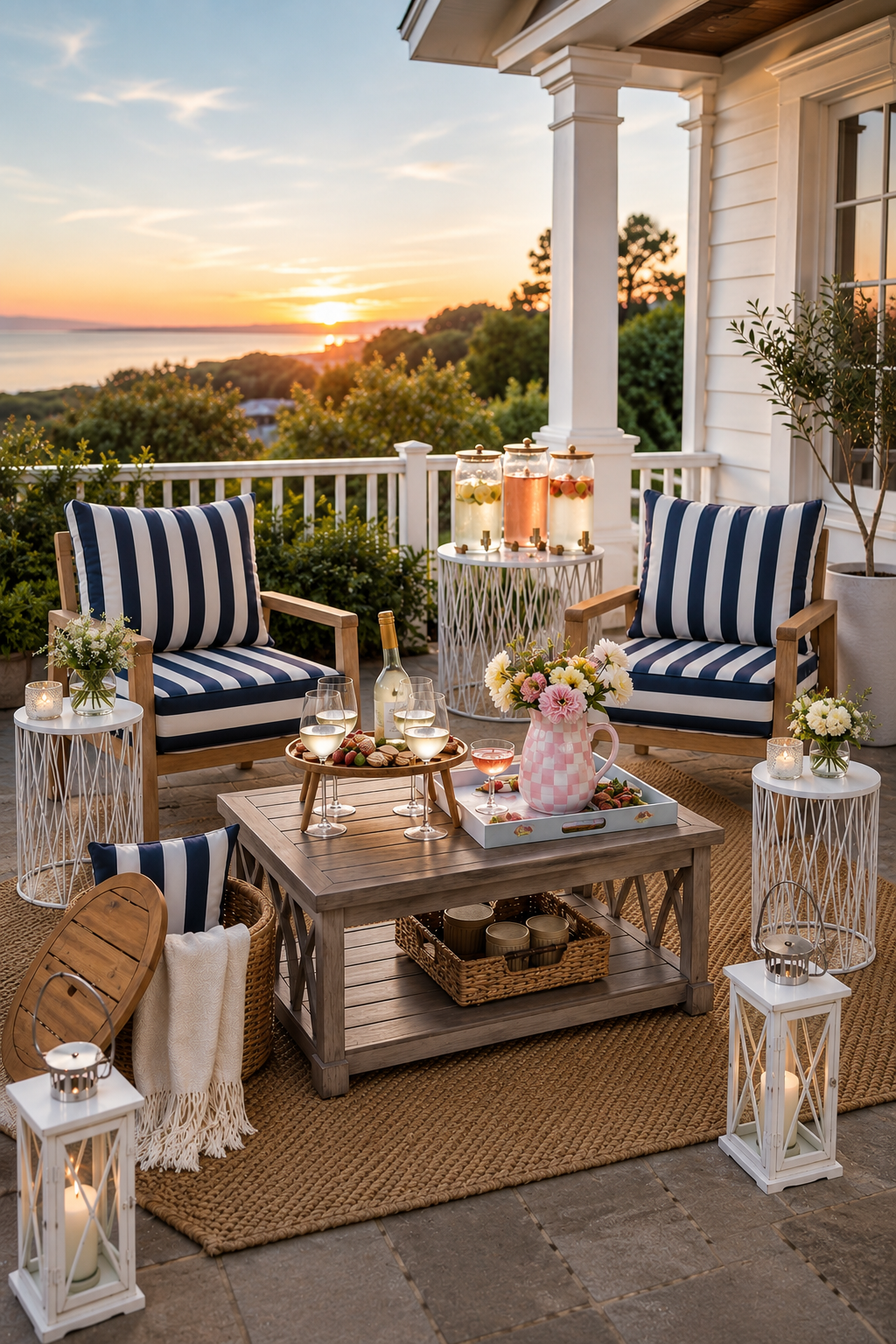
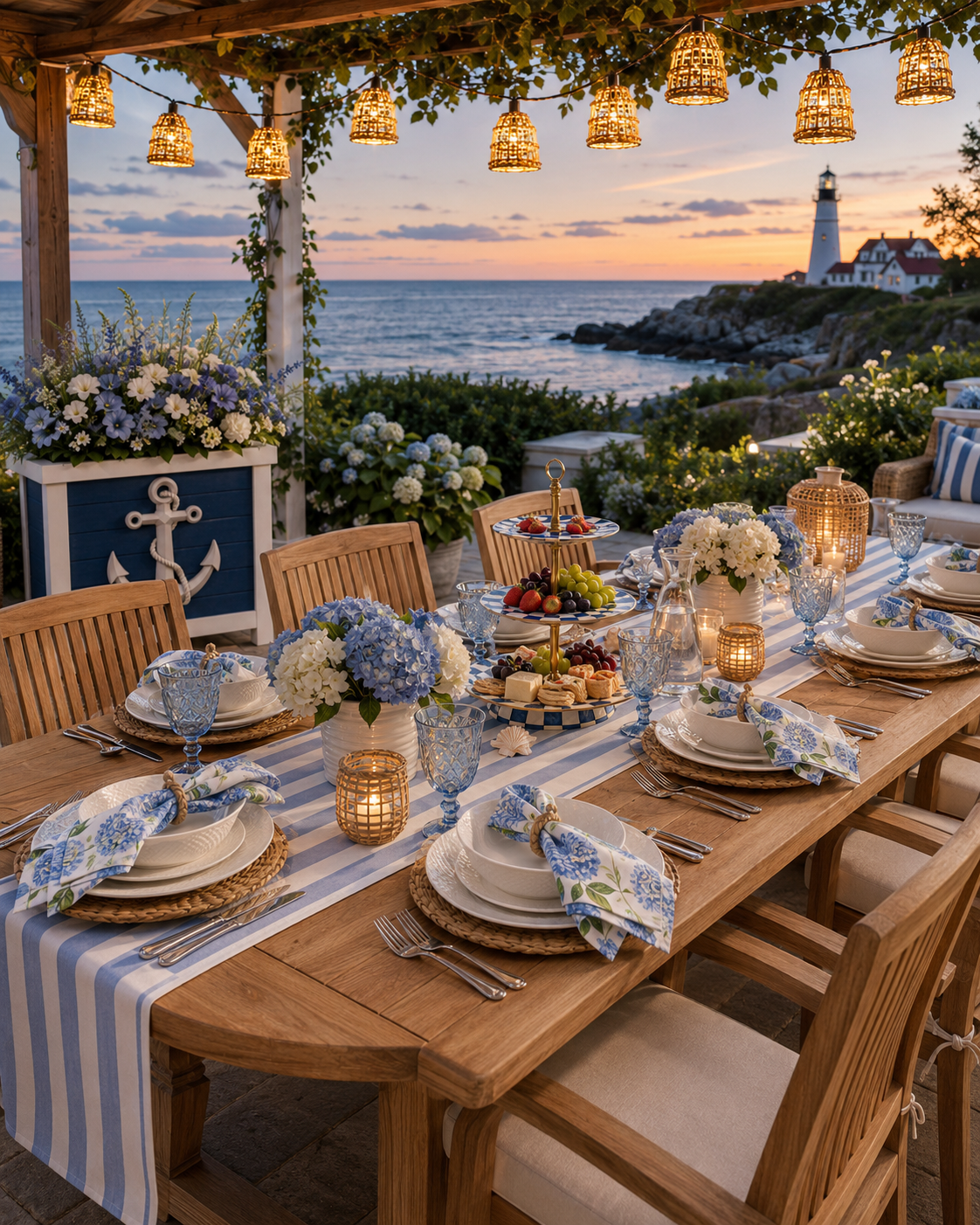
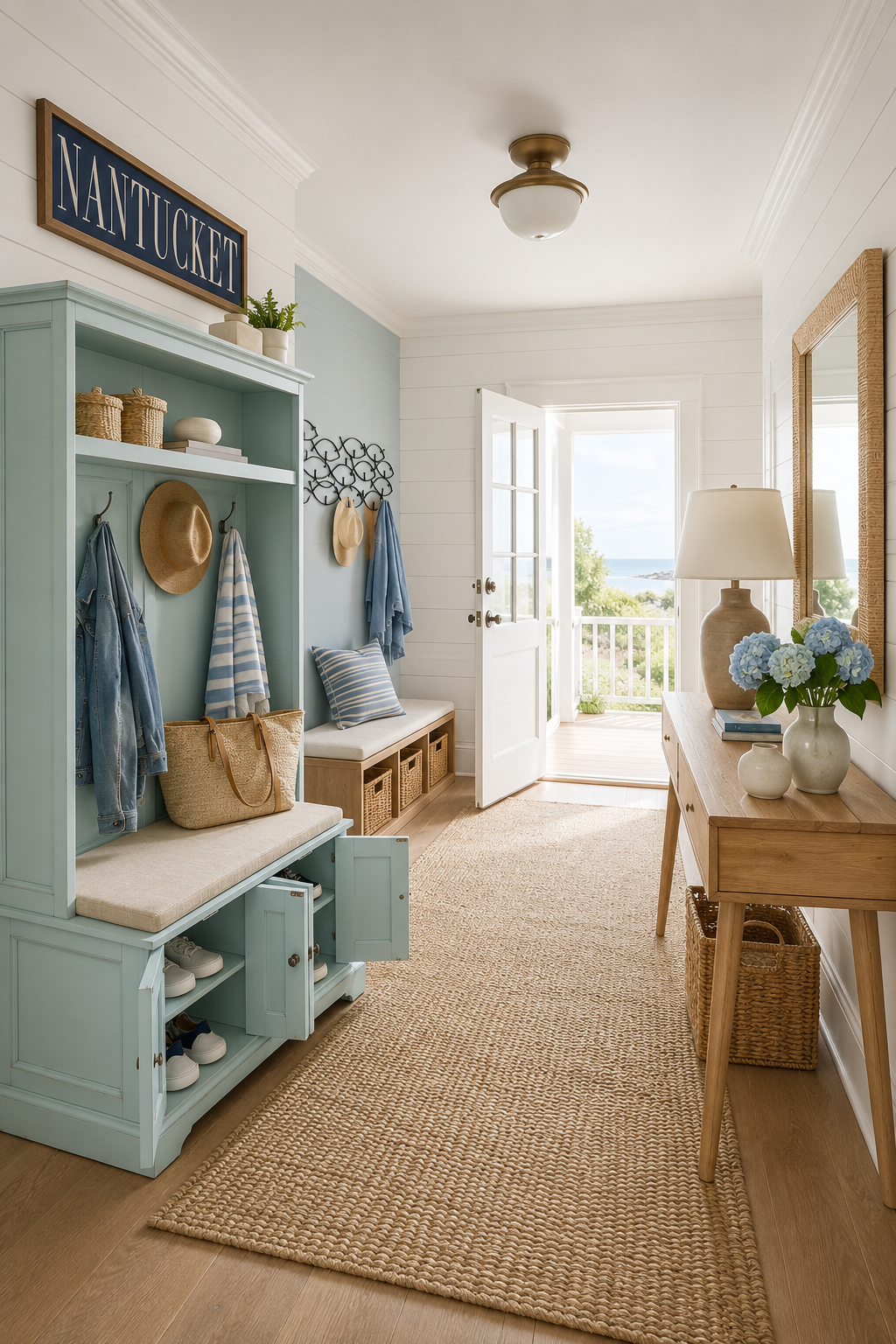
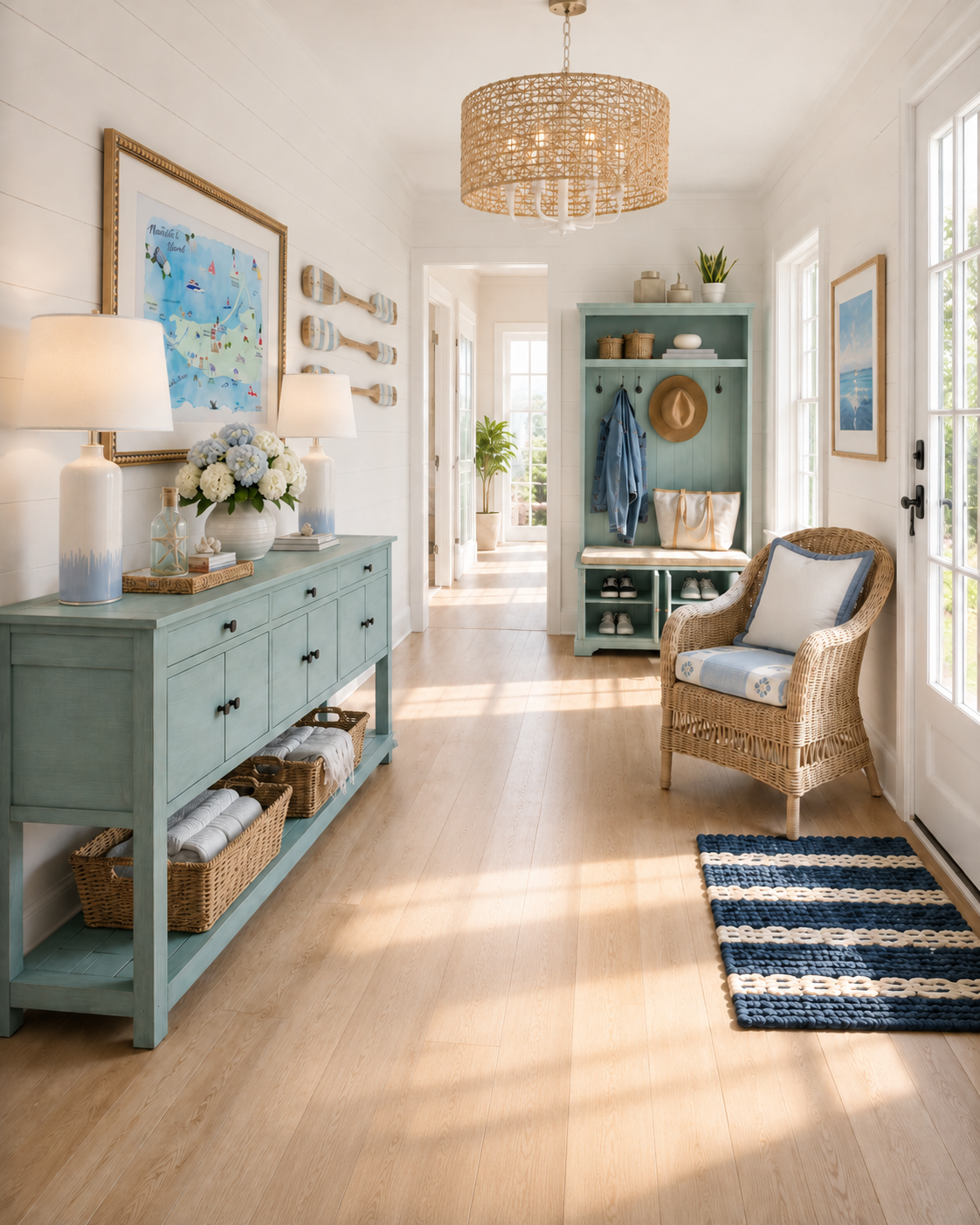
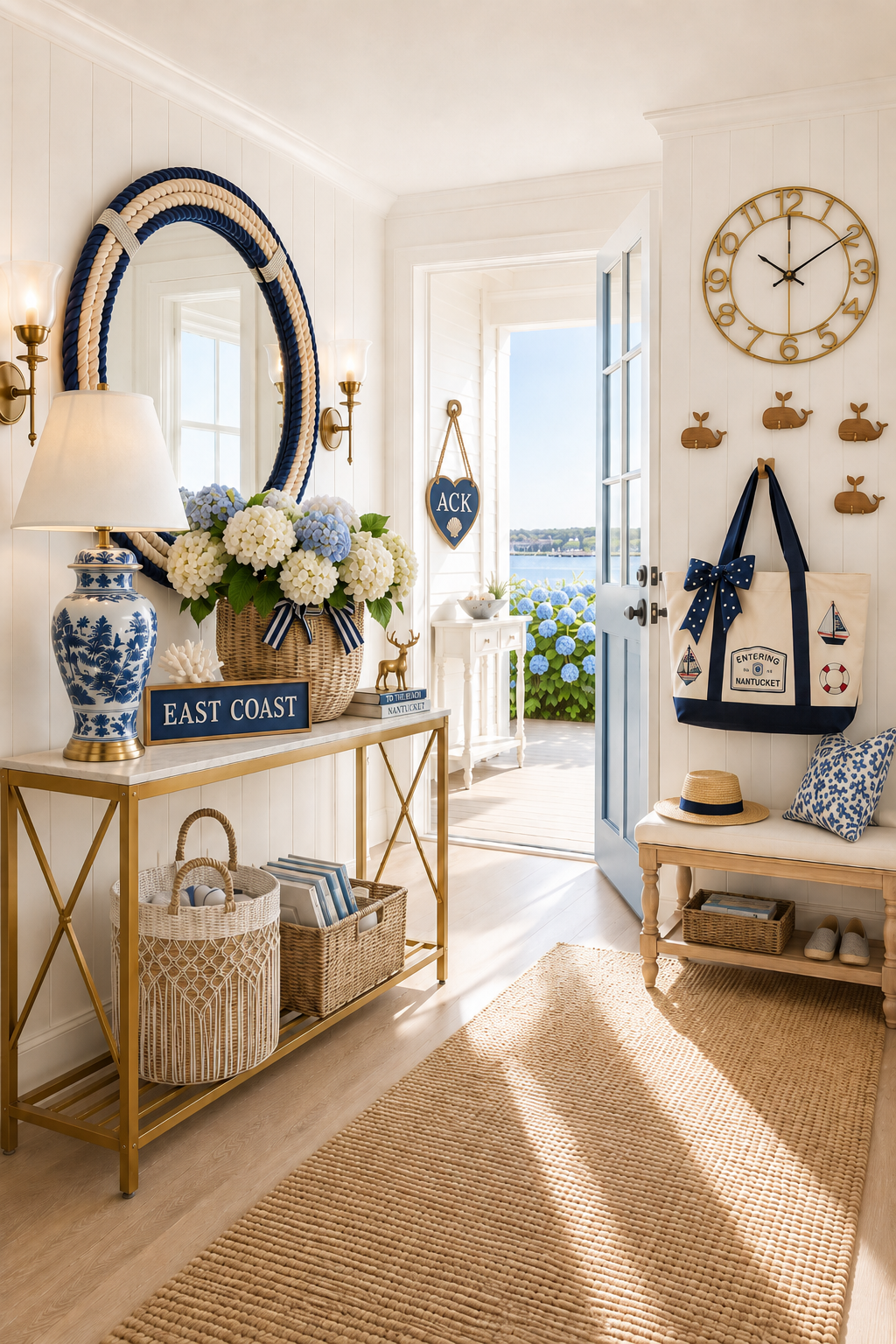
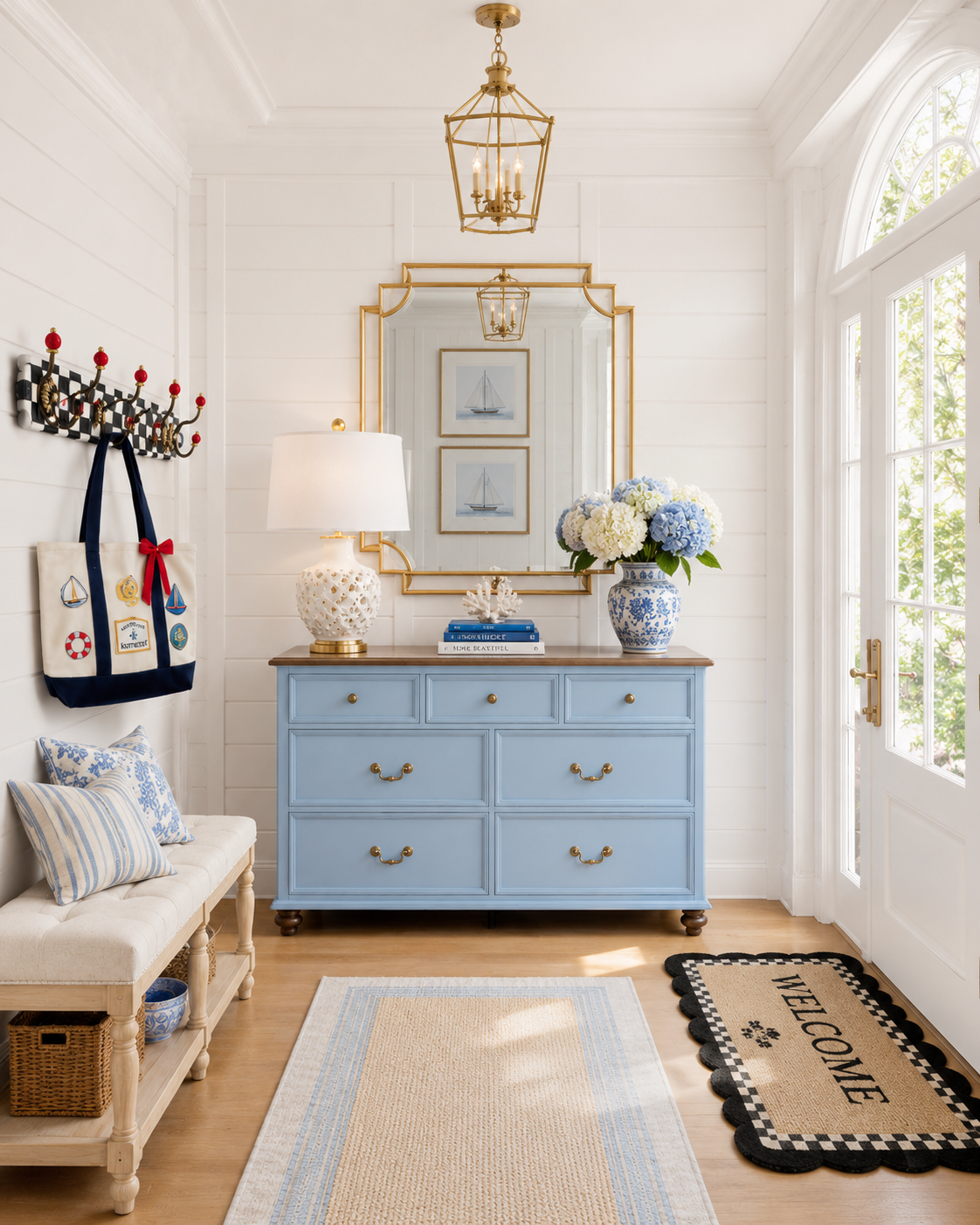
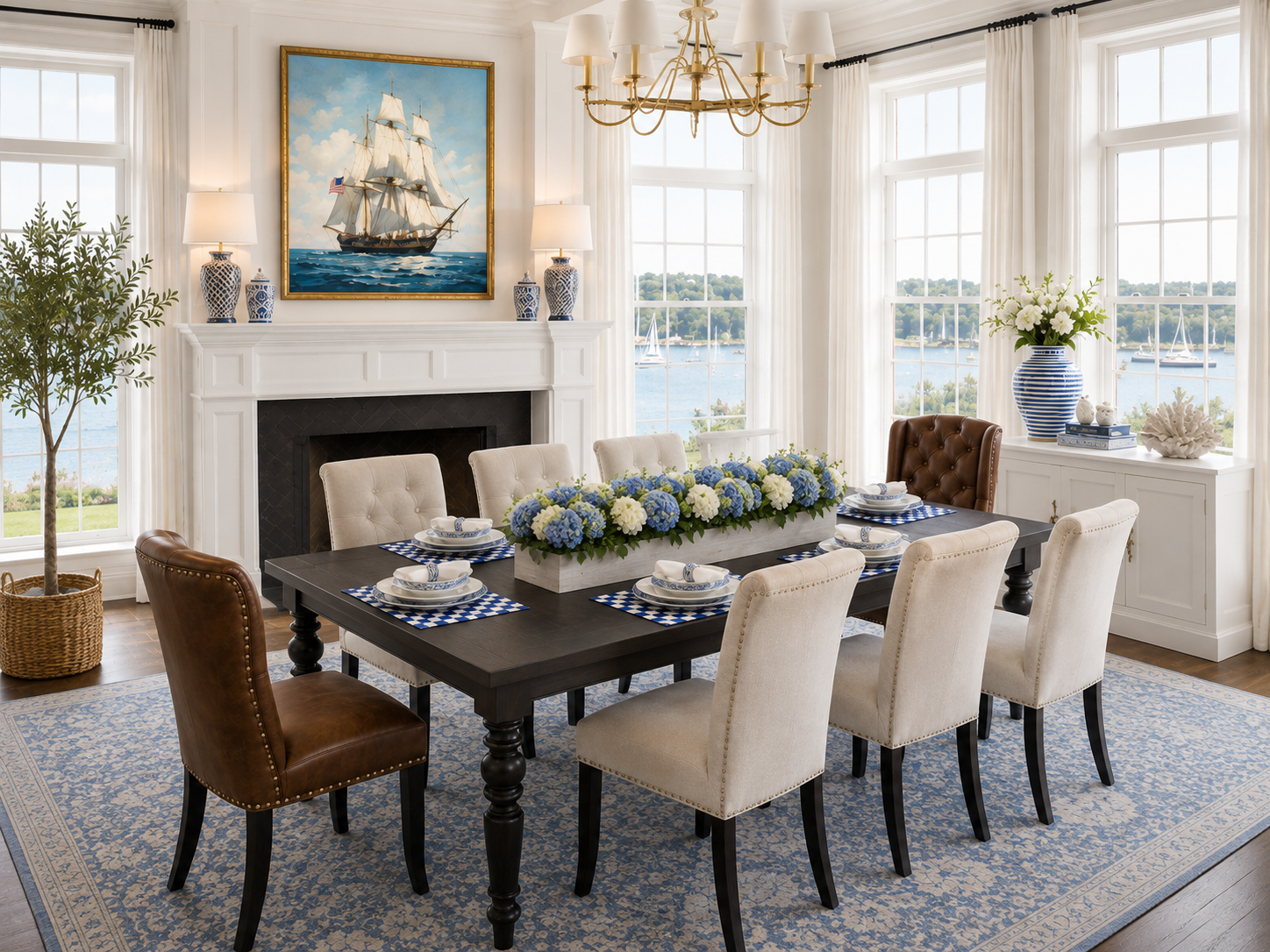
There is a particular quality of light on Nantucket in late June — pale, salted, slightly silver — and any living room that has ever felt like the island is really just a room built to hold that light. That is the whole secret. Before the ginger jars and the sisal rugs and the hydrangeas in an ironstone pitcher, there is a room with tall windows, white walls, and nothing standing in the way of the afternoon. Everything else is layering.
It helps to understand where the look comes from. Nantucket's architecture was never designed to impress anyone. The island's shingle-style and Quaker-plain houses were built by whaling families and ship's carpenters who worked with what came off the boats: cedar shingles left to weather silver in the salt air, wide-plank floors, painted beadboard, small-paned windows set close under low eaves. The Historic District Commission has kept that vocabulary intact since 1955, which is why the town still looks the way it does — grey shingle, white trim, black shutters, and almost nothing else. Interiors followed the same logic. Rooms were pale so they would stay bright through a long grey winter. Furniture was comfortable because families actually lived in it. Materials were natural because natural materials survive salt and damp and dogs and children.
That inheritance is the reason a Nantucket living room never dates. A room built on white walls, worn wood, woven fiber, and one disciplined color story cannot fall out of fashion, because it was never in fashion to begin with. Trends move through the accessories — a bolder block print one summer, a softer stripe the next — while the bones stay exactly where they were.
Blue and white is the color story, and it earned its place honestly. Chinese export porcelain came into New England ports in the China trade, and the same blue-and-white jars and platters that sailed into Boston and Salem ended up on Nantucket mantels. Indigo came in through the textile trade. The sea and the sky supplied the rest. Put a cobalt ginger jar against a white wall and you have three hundred years of American coastal decorating in a single glance — which is precisely why it still reads as correct rather than themed.
Texture is what keeps all that pale from going flat. In an island room, softness and roughness have to sit beside each other: a slipcovered sofa in washed cotton against a sisal rug, a wicker armchair beside a glass-and-brass table, a lightship basket on a bookshelf of glossy white lacquer. Woven materials in particular do the heavy lifting — seagrass, rattan, rope, jute, and the lightship baskets themselves, which began as a genuine island craft made by keepers aboard the Nantucket South Shoal lightship in the 1850s and are still woven on the island today. One well-made woven thing in a room of painted surfaces reads as history, not as decoration.
Then there is the wood. Nothing anchors a bright room faster than a piece of old, honest timber — a reclaimed plank coffee table, a military chest painted hydrangea blue thirty years ago and worn back to the grain at its corners, a weathered teak table left on a porch through four winters. Antique wood is the counterweight that keeps a white room from floating away, and it gives the eye something to land on.
Flowers finish the room, and on Nantucket they are almost always hydrangeas. The island's acidic soil turns mopheads that intense periwinkle blue you cannot reliably reproduce anywhere else, and from July into September they spill over every picket fence in town. Indoors, one loose armful in a white pitcher is worth more than any arrangement — it brings the color of the garden inside and keeps the room feeling seasonal and alive.
Finally, comfort. A Nantucket living room is a room people sit in wet from the beach. Slipcovers come off and go in the wash. Coffee tables take feet. Sofas are deep enough for a long book and an afternoon rain. Nothing is precious, and that lack of preciousness is exactly what makes these rooms feel generous rather than staged.
What follows are twenty-five living rooms we styled and photographed for Nantucket Charm, each one built around those same principles and each one shoppable down to the last pillow. Read them as ideas rather than instructions — take the rug from one, the lamp pair from another, and the way the books are stacked from a third. Between every five rooms you will find a short essay on the thinking behind the style, and at the end, a practical guide to rugs, pillows, coffee tables, hydrangeas, wicker, built-ins, and art.